Trends move fast in 2026 - blink, and you’ll miss them. Social media isn’t waiting for anyone, and if your brand is still reacting instead of predicting, you’re already behind. That’s where predictive social analytics comes in. These AI-powered tools don’t just analyze what’s happening - they tell you what will happen, giving you up to 90% accurate forecasts on trends up to 90 days in advance.
Why does it matter? Because jumping on trends early - before they peak - makes your brand look sharp, not stale. Companies using these tools have seen 23% faster feature adoption and 18% fewer failed launches. The ROI? Huge. Think 72 hours saved per quarter and $16,000 annually just by automating insights.
Here’s the deal: we’ve ranked the best tools for social media listening and monitoring for 2026, breaking down their predictive accuracy, standout features, and price points. Whether you’re a small team or a global brand, there’s something here for you.
Quick Highlights:
- Brandwatch: Best for anomaly detection and visual listening ($2,000+/month).
- Talkwalker: 90-day trend forecasting with 90% confidence ($500–$2,000/month).
- Sprout Social: Unified platform with AI-powered insights ($2,000+/month).
- Neticle: Affordable multilingual sentiment tracking (under $500/month).
- Meltwater: Predictive reach models and media intelligence ($500–$2,000/month).
Bottom line? These tools aren’t just about saving time - they’re about making smarter, faster decisions in a world where trends explode and vanish in hours. Ready to stay ahead? Let’s break it all down.
The Rise of Predictive Analytics in Marketing Strategy
sbb-itb-b3cfc51
What is Predictive Social Analytics & Why 2026 Matters
Let’s break it down: predictive social analytics is like having a crystal ball for the digital world. By harnessing AI, machine learning, and data mining, it digs through past patterns, spots seasonal trends, and flags anomalies to forecast what’s coming next. Whether it’s a hashtag, a viral topic, or a platform shift, these tools map out where engagement, sentiment, and conversations are headed - sometimes months in advance.
Here’s the game-changer: unlike reactive tools that scramble to analyze what’s already happened, predictive platforms give you a heads-up. They let you prep content, tweak your messaging, or jump on trends while they’re still gathering steam. It’s all about hitting that sweet spot - the catalyst phase - where a trend is climbing but hasn’t yet exploded.
Predictive vs. Reactive Tools: Why Timing is Everything
The difference between predictive and reactive tools boils down to timing and strategy. Reactive tools are your go-to for crisis control - say, catching a complaint before it goes viral or tracking a hashtag in real time. Predictive tools? They’re all about staying ahead of the curve, using a mix of historical and real-time data to map out what’s next. Check out how they stack up:
| Approach | Focus | Timeframe | Strategic Value | Key Activities |
|---|---|---|---|---|
| Monitoring (Reactive) | Real-time awareness | Immediate | Crisis management | Keyword alerts, hashtag tracking |
| Tracking | Historical analysis | Past & Present | Benchmarking & reporting | Engagement & sentiment analysis |
| Forecasting (Predictive) | Trend prediction | Future | Proactive planning | Modeling trajectories, 90-day forecasting |
Here’s the kicker: 22% of marketers in 2026 feel the daily grind of responding to viral moments. If your team is stuck reacting, you’re already behind. Predictive tools let you jump in early, boosting your relevance and algorithmic reach while others are still catching up.
Why 2026 Changes the Game
So, why is 2026 such a big deal for predictive analytics? Three shifts are rewriting the playbook:
- Trends move faster than ever. The old bell curve - where trends built slowly, peaked, and faded - is dead. Now, trends burst onto the scene, dominate for a couple of days, and disappear just as quickly. AI-driven content and algorithmic amplification are driving these rapid spikes and dips. If you’re not spotting trends early, you risk looking outdated.
- AI is running the show. In 2026, "Agentic AI" tools handle the heavy lifting, crunching massive datasets into actionable insights in seconds. For instance, Sprout Social processes 600 million messages daily, with predictive models delivering 90-day forecasts at 90% confidence. No more manual reporting - AI is doing it faster and smarter.
- Visual listening evolves. Tools can now recognize logos, products, and even specific scenes in photos and videos, catching mentions without text. Industries like fashion and automotive are thriving on this, as their branding often lives in visuals. Combine this with sentiment analysis that’s 85-92% accurate in English, and you’ve got tools that can detect sarcasm, joy, and anger - not just "positive" or "negative" vibes.
The ROI of Predictive Analytics
Let’s talk dollars and cents. Predictive tools don’t just save time - they drive results. By automating tasks, marketing teams save 72 hours per quarter and $16,000 annually. But the real magic is in the numbers:
- In 2025, Metia used Brandwatch’s predictive insights to optimize Twitter ads. The result? A 22% higher click-through rate, 59% higher landing rate, and 144% better conversion rate.
- Automated alerts can flag sentiment shifts early, helping brands avoid PR disasters. Considering 73% of consumers will ditch a brand for a competitor if they don’t get a timely response on social media, these alerts are a must-have.
Predictive analytics flips the script. Instead of chasing trends after they peak, you’re in the driver’s seat, ready to act during the virtuous circle phase - where your timing boosts both your reach and your relevance. With the ROI case made, it’s time to dive into the tech behind these tools in 2026.
Core Technologies Behind Predictive Tools
Technologies Powering Predictive Analytics
Predictive social analytics in 2026 is built on three main technologies. First up, machine learning (ML). By crunching past data, ML identifies patterns, seasonality, and outliers, then turns those insights into 90-day forecasts with an impressive 90% confidence level. Next, natural language processing (NLP) has leveled up. It's no longer just about tagging something as positive or negative. Modern NLP can pick up on sarcasm, mixed emotions, and even pinpoint specific feelings like joy or anger, with accuracy hitting 85–92% in English and 75–80% in other languages. Lastly, anomaly detection keeps an eye on conversation volumes in real time, flagging unusual spikes or dips that could signal a hot trend or a brewing crisis.
But it doesn’t stop there. Visual listening is now a game-changer, analyzing images and videos to detect logos, products, and even specific scenes in user-generated content - no text required. Fast forward to 2026, and Agentic AI is taking things up a notch. These autonomous AI agents sift through massive datasets to deliver instant insights, automating tasks like research and reporting so teams can focus on strategy. Mastering these tools is key to leveraging their potential through the right metrics.
Key Metrics for Predictive Analytics
Metrics are what separate educated guesses from precise strategies. Take trend velocity, for example - it measures how quickly a topic is gaining traction by analyzing the rate of change in mention volume over a specific time. This is crucial in 2026, where trends erupt in sudden "spikes and dives" instead of slow, predictable curves. Then there’s sentiment trajectory, which tracks how audience sentiment evolves. By comparing net sentiment at two points in time (Net Sentiment at Time B minus Time A), you can identify when enthusiasm turns into backlash and pivot before things go south. Lastly, a virality score estimates how far a post or hashtag could spread, helping you decide where to focus your budget and energy.
Here’s a quick look at these metrics:
| Metric | Definition | Formula/Logic |
|---|---|---|
| Trend Velocity | Speed of topic growth | Rate of change in mention volume over time |
| Sentiment Trajectory | Direction of audience feeling | Net Sentiment (Time B) - Net Sentiment (Time A) |
| Virality Score | Predictive estimate of reach | AI-driven projection of potential impact |
| Share of Voice | Brand presence vs. competitors | (Brand Mentions / Total Industry Mentions) × 100 |
Must-Have Features in Predictive Tools
Now, let’s talk features. The best predictive tools don’t just spit out data - they turn insights into action. Start with predictive forecasting, where AI models project future trends, sentiment changes, and engagement levels over the next 90 days. Then, look for automated alerts that flag unusual activity or key events, so you can act fast before a trend peaks or a crisis escalates. Tools with advanced sentiment and emotion analysis go beyond surface-level insights, picking up on sarcasm, regional nuances, and specific emotions like joy or sadness.
Another must? Explainability. Tools that let you ask questions in plain language and get clear, summarized insights from complex data save hours of manual analysis. For global brands, multi-platform and multi-language support is non-negotiable. Trends often start on one platform, like TikTok, before spilling over to others like Instagram. Cross-platform validation helps you figure out whether a trend is niche or has broader appeal, while support for over 30 languages ensures you’re not missing regional context. Lastly, unified workflow integration is a game-saver. Tools that work seamlessly with publishing and engagement platforms eliminate the hassle of switching between apps, letting you act on insights in real time.
These features aren’t just nice-to-haves - they’re essential for staying ahead in a fast-moving, unpredictable landscape. With the right tools, you can anticipate trends and execute strategies that keep your brand in the spotlight.
Top 7 Predictive Social Analytics Tools Reviewed
The tools below showcase the leading predictive analytics platforms available in 2026. Whether you're after Brandwatch's anomaly detection or Determ's crisis forecasting, the right pick depends on your team's needs, budget, and whether you're tackling crisis alerts or mapping long-term trends. All seven tools utilize machine learning and natural language processing to deliver insights, but their workflows, accuracy, and pricing differ widely.
These platforms highlight how predictive analytics is driving real-time decision-making in 2026.
Brandwatch
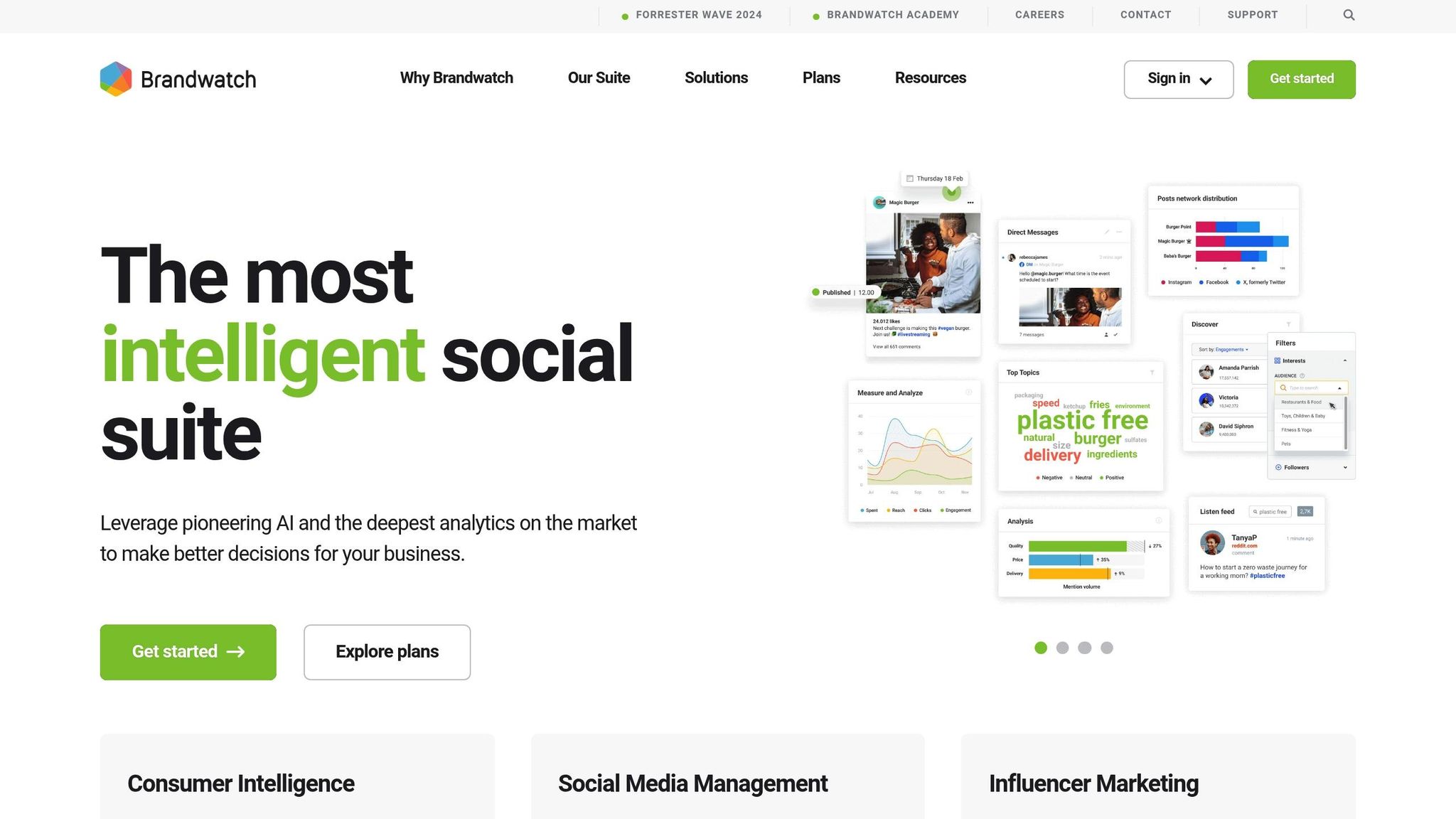
Brandwatch excels in anomaly detection, thanks to its Iris AI engine, which identifies emerging trends without requiring manual searches. By analyzing millions of global sources, it flags real-time conversation shifts, making it a go-to for deep consumer insights. Its visual listening feature is especially powerful, recognizing logos and products in images and videos - even when no text is present - a must-have as visual content dominates platforms like TikTok and Instagram.
Predictive Features:
- Iris AI automatically flags anomalies and explains their causes.
- Visual listening identifies logos and objects in user-generated content.
- Customizable Boolean search allows for precise audience targeting.
Accuracy & Pricing (2026): Brandwatch achieves 92% sentiment accuracy for English, with enterprise pricing starting at $2,000+/month.
Use Cases: Virgin Holidays leveraged Brandwatch to spot travel trends early, gaining a competitive edge in readership. Jaya Deshpande, Principal Social Analyst at the BBC, praised its flexibility:
"My favorite thing about Brandwatch is the ability to really customize the data. We're able to customize what we're looking for and the audiences we're speaking to".
| Pros | Cons |
|---|---|
| 92% sentiment accuracy for English | High cost - enterprise-only pricing |
| Customizable Boolean search | Steep learning curve for new users |
| Visual listening for logos/objects | Requires dedicated training time |
| Iris AI flags anomalies automatically | Overkill for small teams or single-brand monitoring |
Workflow Example:
- Create a saved search using Boolean queries tailored to your 2026 predictive model.
- Iris AI detects an unusual spike in mentions.
- Dive into the dashboard to analyze sentiment drivers.
- Use these insights to craft a data-driven report or social post.
[image:brandwatch-iris-dashboard]
Full review: Brandwatch
Next up, Sprout Social simplifies predictive insights with its integrated interface.
Sprout Social
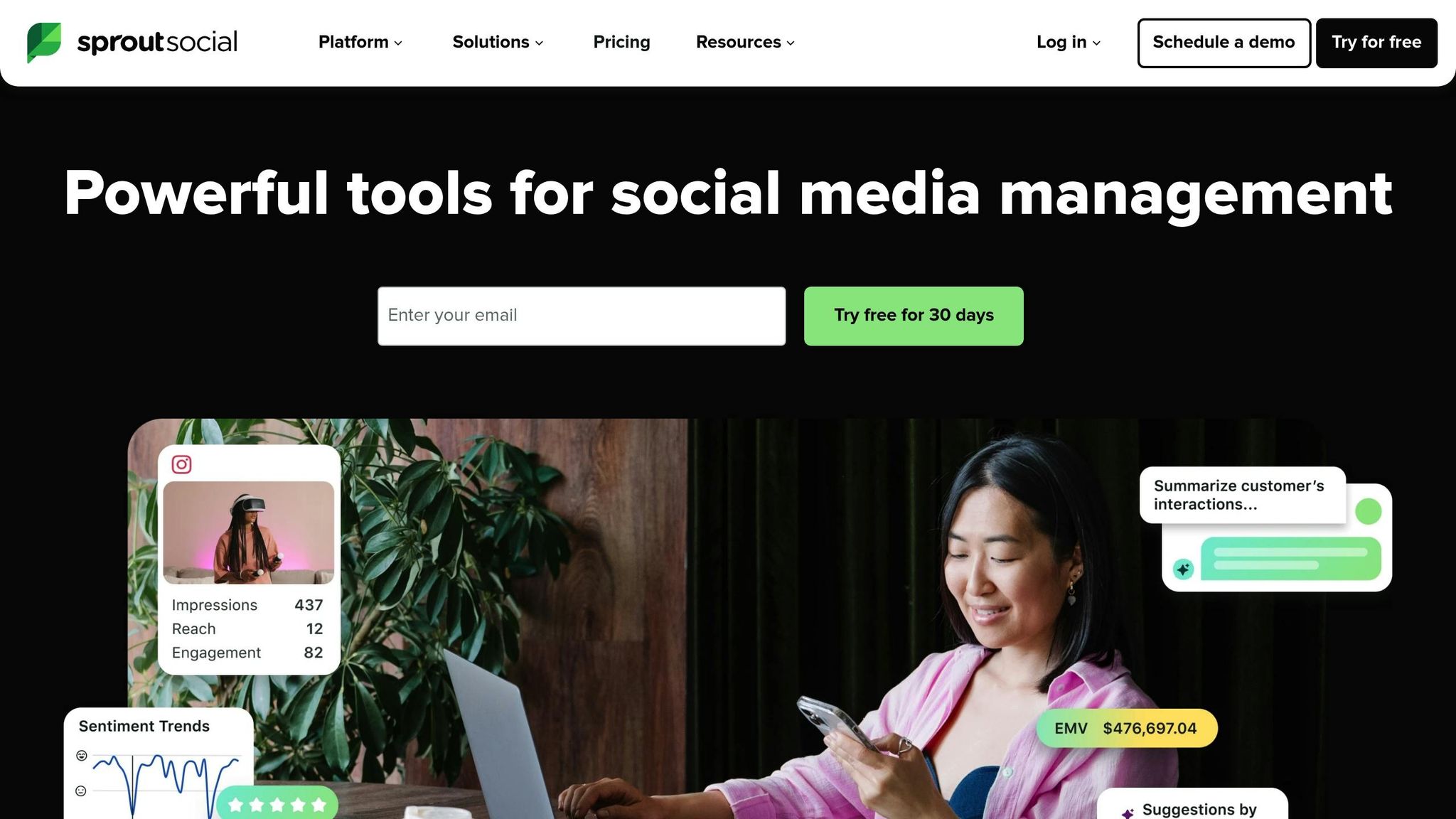
Sprout Social shines with its unified platform, bringing listening, publishing, and engagement under one roof. This reduces the tool-switching headaches that slow teams down. Its Trellis AI teammate allows plain-language questions like, "What’s driving negative sentiment about our product this week?" and delivers instant, clear answers. The platform's vast data processing capabilities make it a powerhouse for real-time sentiment tracking and forecasting.
Predictive Features:
- Trellis AI provides plain-language insights.
- Spike Alerts notify teams of sudden conversation shifts.
- AI Assist generates content variations for fresh messaging.
- Smart Inbox routes urgent messages to the right teams.
Accuracy & Pricing (2026): Sprout Social's listening tools are supported by massive daily data volumes. Pricing starts at under $500/month for Starter plans, with enterprise plans at $2,000+/month.
Use Cases: Caesars Entertainment's Bianca Shaw highlighted:
"AI Assist in Sprout Social is so helpful... having the functionality to generate variations is a great tool for workflow efficiency and keeping our content feeling fresh across channels".
Chipotle used Sprout’s sentiment tracking during COVID-19 to gauge customer mood and launched the successful #ChipotleTogether campaign, emphasizing safety and free delivery.
| Pros | Cons |
|---|---|
| Unified UI for listening, publishing, and engagement | Advanced listening features require higher-tier plans |
| Trellis AI simplifies complex queries | Limited research customization compared to Brandwatch |
| Affordable entry-level pricing for SMBs | Visual listening options are less robust |
| Excellent customer care tools via Smart Inbox | Costs can climb for enterprise-level features |
Workflow Example:
- Receive a Spike Alert about a sentiment shift.
- Use Trellis AI to summarize the key conversation drivers.
- Smart Inbox routes critical messages to customer care.
- Generate response variations with AI Assist.
[image:sprout-trellis-workflow]
Full review: Sprout Social
Neticle
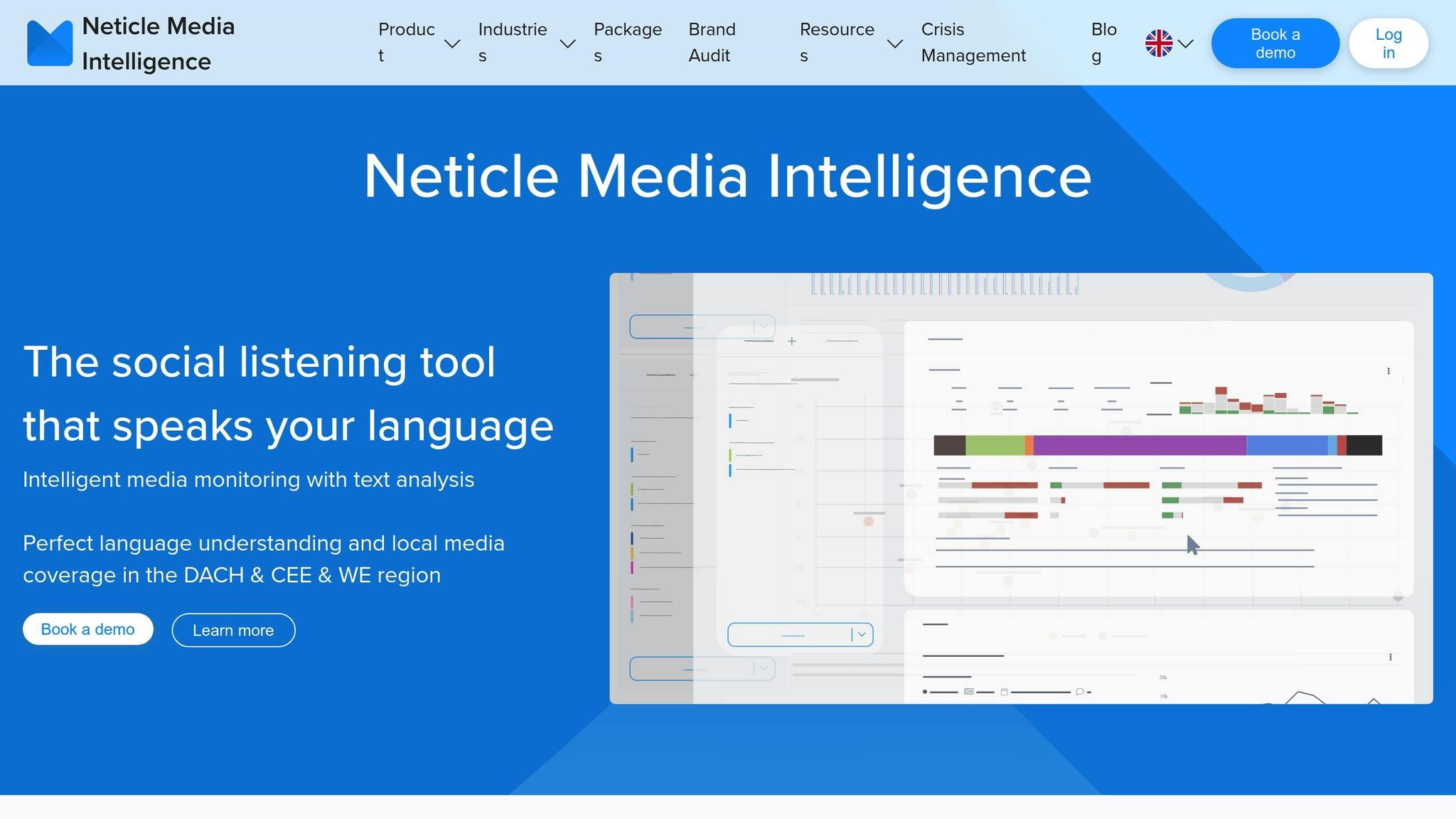
Neticle stands out for its multilingual NLP, making it an excellent option for brands operating in non-English markets. While it lacks some of the flashier predictive tools of Brandwatch or Talkwalker, its strength lies in accurate sentiment analysis across 30+ languages. For European or global brands, this ensures precise monitoring of regional conversations without relying on clunky translations.
Predictive Features:
- Multilingual sentiment analysis spanning 30+ languages.
- Real-time multilingual alerts and competitor sentiment benchmarking.
- Topic clustering to identify emerging conversational themes.
Accuracy & Pricing (2026): Neticle delivers strong multilingual accuracy and offers budget-friendly pricing, typically under $500/month for small teams.
Use Cases: European brands rely on Neticle to track sentiment in languages like German, French, and Spanish, avoiding translation errors. It’s particularly popular in Eastern Europe.
| Pros | Cons |
|---|---|
| Robust multilingual NLP across 30+ languages | Predictive capabilities lag behind Talkwalker |
| Affordable pricing for smaller teams | Limited visual listening features |
| Real-time sentiment alerts | Smaller data coverage compared to enterprise tools |
| Effective topic clustering | Less recognized in North America |
Workflow Example:
- Set multilingual queries for your key markets, aligned with the 2026 predictive model.
- Get real-time alerts for sentiment changes.
- Analyze topic clusters to spot new trends.
- Benchmark against competitors to refine your response strategy.
[image:neticle-multilingual-dashboard]
Full review: Neticle
For agencies needing fast crisis response, the next tool focuses on specialized alerts.
Determ
Built for crisis forecasting and agency workflows, Determ prioritizes real-time sentiment analysis with automated alerts. Its predictive focus lies in spotting potential PR problems before they spiral. Users can set custom thresholds for alerts, ensuring that notifications only trigger when mention volume or negative sentiment crosses a specific baseline - cutting down on unnecessary pings.
Predictive Features:
- Crisis forecasting with real-time sentiment tracking.
- Custom alert thresholds to reduce notification fatigue.
Accuracy & Pricing (2026): Determ’s mid-range pricing, from $500–$2,000/month, makes it ideal for agencies juggling multiple clients.
Use Cases:
(Details to be completed in the next section.)
Head-to-Head Comparison Tables
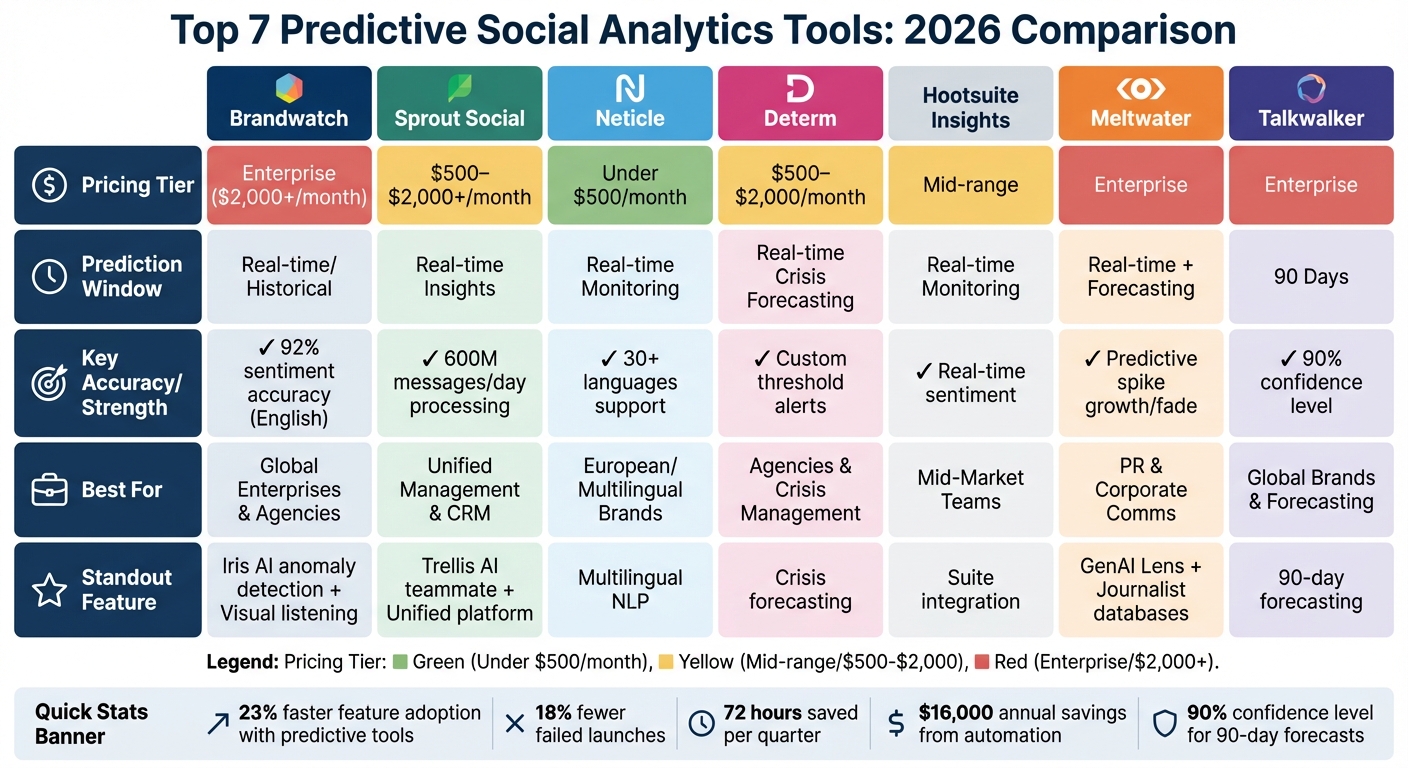
Top 7 Predictive Social Analytics Tools Comparison 2026
After diving deep into the top predictive analytics tools, here's a quick comparison to help you zero in on the perfect match for your 2026 game plan. These tables break down how these tools help marketers forecast trends and stay ahead with proactive social strategies.
Whether you're working with a tight budget, managing a large team, or need long-term predictions, these side-by-side breakdowns cover accuracy, forecast windows, pricing, and ideal use cases.
Tool Performance Comparison
| Tool | Accuracy/Confidence | Prediction Window | Platforms Covered | Pricing Tier |
|---|---|---|---|---|
| Brandwatch | High (Iris AI) | Real-time/Historical | 100M+ sources (Facebook, Instagram, Twitter, YouTube, blogs, news) | Enterprise ($2,000+/month) |
| Sprout Social | High-Velocity Processing (600M messages/day) | Real-time Insights | Facebook, Instagram, Twitter, LinkedIn, TikTok, Reddit | $500–$2,000+/month |
| Neticle | Strong Multilingual (30+ languages) | Real-time Monitoring | Social, web, news | Under $500/month |
| Determ | Custom Threshold Alerts | Real-time Crisis Forecasting | Social, web, news | $500–$2,000/month |
| Hootsuite Insights | Real-time Sentiment | Real-time Monitoring | Major social networks | Mid-range |
| Meltwater | Predictive Spike Growth/Fade | Real-time + Forecasting | Social, news, influencer databases | Enterprise |
| Talkwalker | 90% Confidence Level | 90 Days | Social, news, blogs, forums | Enterprise |
Looking for long-term insights? Talkwalker offers a 90-day forecast with a solid 90% confidence level. Need to process massive data streams? Sprout Social handles 600 million daily messages, making it perfect for high-speed campaigns. For multilingual needs without breaking the bank, Neticle is a strong contender, while Brandwatch's Iris AI stands out with its ability to spot unusual patterns across vast data sources.
The next table shifts focus to how these tools integrate with existing workflows and which scenarios they shine in.
Best Use Cases & Integrations
| Tool | Best For | Key Integrations | Alert Capabilities |
|---|---|---|---|
| Brandwatch | Global Enterprises & Agencies | Slack, Email, CRM, BI Dashboards | AI-driven alerts for unusual surges |
| Sprout Social | Unified Management & CRM | Salesforce, Microsoft Dynamics, Asset Library | Spike alerts and sentiment-based Smart Inbox alerts |
| Neticle | European/Multilingual Brands | API, Custom Dashboards | Real-time multilingual sentiment alerts |
| Determ | Agencies & Crisis Management | Slack, Email | Custom threshold alerts to reduce noise |
| Hootsuite Insights | Mid-Market Teams | Hootsuite Suite, Slack | Real-time sentiment and volume alerts |
| Meltwater | PR & Corporate Comms | Dow Jones, YouTube, Klear | Predictive spike growth/fade; GenAI Lens |
| Talkwalker | Global Brands & Forecasting | Hootsuite, Yeti Agent, BI Tools | AI-powered peak detection; Trend Velocity |
Sprout Social is a favorite for agencies juggling multiple clients, thanks to its integrations with Salesforce and Microsoft Dynamics, plus its Smart Inbox that flags urgent sentiment shifts. Meltwater is tailor-made for PR teams needing tools like journalist databases and its GenAI Lens for monitoring how brands appear in AI-generated content. For smaller budgets, Neticle offers excellent multilingual monitoring, while Determ's custom alerts keep you informed without drowning in notifications during crises.
Full reviews: Brandwatch | Sprout Social | Neticle | Determ | Hootsuite Insights | Meltwater | Talkwalker
Armed with these comparisons, you're ready to dive into a 6-step workflow for implementing predictive analytics effectively. Stay tuned!
How to Implement Predictive Analytics: 6-Step Workflow
Shifting from simply reacting to trends to predicting them before they explode is the dream, right? Imagine spotting the next viral wave two days ahead or defusing a PR crisis before it spirals. That’s the magic of predictive analytics. The industry is booming, with projections showing it’ll grow from $18 billion in 2024 to a staggering $95 billion by 2032. And it's not just numbers - real-world success stories back it up. In 2025, Metia used Brandwatch to fine-tune Twitter ads, achieving a 22% higher click-through rate, 59% higher landing rate, and 144% higher conversion rate. Ready to make the leap? Here’s the six-step playbook to bring predictive analytics into your workflow.
Step-by-Step Implementation
1. Connect and Unify Data
First things first: bring all your data together. If your Instagram stats, email campaigns, and PR mentions are scattered, you’re setting yourself up for incomplete insights. Tools like Brandwatch and Meltwater simplify this by merging paid, earned, and owned media into one dashboard. Use APIs and middleware to link platforms like TikTok, LinkedIn, and Reddit. And don’t skip the data-cleaning step - it’s a must for reliable forecasts.
2. Train Models with Context
Generic models don’t cut it. Tailor them with your brand’s data, market trends, and unique voice. For example, a fashion brand should train its system to recognize seasonal trends or competitor launches. AI tools like Sprout Social can process 600 million messages daily, but they’re only as good as the context you give them.
3. Set Up Automated Alerts
No one has time to sift through endless notifications. Configure Spike Alerts to flag major shifts in sentiment or volume. Automation is key - tools can handle up to 50,000 posts per second. Use custom thresholds, like those in Determ, to cut through the noise and focus on what matters. For instance, urgent complaints can be routed to customer service immediately, while positive mentions can wait for engagement.
4. Customize Dashboards
Dashboards should work for you, not the other way around. Tools like Talkwalker offer forecasts with 90% confidence levels. Highlight metrics that matter most to your team, whether it’s sentiment trends or competitive share of voice. Embed these insights into platforms like Slack or Salesforce to make adoption seamless. As insightsoftware puts it:
"Predictive analytics is most effective when embedded within the applications people already use and trust".
5. Test Predictions
Before scaling, run a two-week pilot to see how accurate the forecasts are. If your tool predicts a surge in interest for an upcoming product launch, test it by releasing content early and tracking engagement. Document the results in an AI Playbook to refine your strategy for future campaigns.
6. Scale and Integrate Cross-Functionally
Don’t keep insights siloed in the social team. Share them with PR, sales, and product development. For example, if Neticle flags a spike in multilingual sentiment about a feature, pass that data to the product team to guide updates. In 2025, Bimbo turned a potential crisis into a $580,000 sales opportunity by acting on real-time insights. That’s the kind of payoff you get when everyone’s on the same page.
Common Problems and Fixes
| Problem | Description | Actionable Fix |
|---|---|---|
| Data Silos | Insights are scattered across channels. | Use unified dashboards to consolidate data. |
| False Positives | Alerts triggered by irrelevant noise. | Refine keyword suggestions with tools like AI Assist. |
| Generic Tone | AI content feels robotic or off-brand. | Develop an "AI Playbook" with tailored prompts. |
| Compliance Risks | Sensitive data shared with public AI tools. | Set a clear AI policy and avoid inputting proprietary data into unregulated tools. |
| Model Drift | Predictions lose accuracy over time. | Monitor for data drift and schedule regular model updates. |
| Low Adoption | Tools feel too complex for users. | Embed analytics into existing workflows and showcase ROI internally. |
Fine-tune algorithms to improve sentiment analysis accuracy.
ROI Calculator Template
| Metric Category | Current Manual Value | Predicted AI-Enhanced Value | Estimated Gain/Saving |
|---|---|---|---|
| Reporting Time | Hours spent per month | Hours with AI automation | (Manual - AI) × Hourly Rate |
| Response Speed | Average reply time | AI-prioritized reply time | % reduction in churn risk |
| Content Output | Posts per week | AI-assisted posts per week | % increase in reach/engagement |
| Crisis Mitigation | Cost of unmanaged crisis | Cost with early alerts | Potential brand equity saved |
| Trend Capitalization | Revenue from reactive trends | Revenue from predicted trends | Delta in campaign conversion |
Say your team spends 20 hours a month on manual reporting, and AI cuts that to 5 hours. That’s 15 hours saved. At $50/hour, you’re looking at $9,000 annually. And crisis prevention? It can save $100,000+ per incident. Faster response times also reduce churn risk - 73% of consumers switch to competitors if brands don’t respond quickly on social media.
AI tools free up about 72 hours per quarter, translating to $16,000 in annual savings. Kara Wenman, Digital Content Marketing Manager at Rover, sums it up perfectly:
"Sprout has helped us better understand who our audience is, how we can be most relevant and effective and really take a customer-first approach. That was difficult for us to do before without having all the dots connected".
Case Studies & Advanced Strategies
Mini-Case Studies
Sprout Social's Internal "Customer Zero" Initiative
Back in December 2025, Sprout Social decided to test their AI Assist tools on themselves. Their internal team, led by Senior Social Media Strategist Olivia Jepson, used automation for tasks like data summarization and alt-text creation. The payoff? They freed up 72 hours per quarter, translating into $16,000 saved annually. Plus, by streamlining customer care workflows, they unlocked $132,000 in yearly value. Greg Rokisky, another Senior Social Media Strategist at Sprout, summed it up:
"AI Assist has transformed our approach to customer care - allowing us to respond faster and with clearer intent."
Bimbo's Crisis-to-Sales Turnaround
When bakery giant Bimbo spotted early signs of a potential PR crisis using Brandwatch's monitoring tools, they didn’t wait around. Instead, they flipped the script with a proactive social campaign. The result? What could’ve been a disaster turned into $580,000 in direct sales.
Mercedes-Benz Poland's Mood-Driven Campaign
Mercedes-Benz took audience engagement to another level with their T-Class campaign in Poland. They used AI to track emotion-focused hashtags like #joy, #love, and #sadness across platforms like Facebook, Instagram, and Twitter. By analyzing daily sentiment, they adjusted the ambient lighting at their headquarters and on billboards to reflect the mood of their audience. It was a clever way to bring digital insights into the physical world.
Metia's Ad Optimization Win
The agency Metia tapped into Brandwatch for deeper audience insights, refining its Twitter ad strategy. The numbers speak for themselves: a 22% jump in click-through rates, a 59% boost in landing rates, and a 144% surge in conversions. That’s the power of data-driven advertising.
Advanced Usage Tips
These success stories highlight how measurable results can come from smart strategies. But if you want to take things even further, here’s how you can push the envelope in today’s fast-moving social media world.
Hybrid Experimentation
Don’t put all your eggs in the automation basket. Mix predictive tools with hands-on experimentation. Try different prompts, tweak post formats, and test creative ideas to see what clicks. For instance, if Neticle flags a rising microtrend in multilingual sentiment, you could test localized messaging on a smaller scale before rolling it out globally. Bianca Shaw, Head of Social Media & Digital Reputation at Caesars Entertainment, shared her take:
"AI Assist in Sprout Social is so helpful, especially when it comes to generative text. As you can imagine, managing a portfolio of brands as large as Caesars, copy redundancy can happen - so having the AI Assist functionality to generate variations is a great tool for workflow efficiency."
Cross-Platform Validation
What’s hot on TikTok might not work on Instagram - or Reddit. That’s why cross-platform analysis is key. Tools like Talkwalker and Meltwater can predict trends with up to 90% confidence by aggregating data from multiple platforms. This helps you figure out whether a spike in sentiment is just a niche moment or something bigger.
Scaling Predictions Across Teams
Social insights shouldn’t live in a bubble. Share them with PR, sales, and product development teams to make smarter moves across the board. For example, if Determ detects a rise in competitor mentions, your sales team can tweak their messaging to stay ahead. Companies that integrate social listening into product strategies see 23% faster feature adoption and 18% fewer failed launches.
Conclusion
From everything we've unpacked, one thing's crystal clear: staying ahead in 2026 means ditching outdated, reactive strategies. Predictive analytics? It’s the game-changer. Trends don’t linger for weeks anymore - they’re here today, gone tomorrow. Brands that hesitate risk being left in the dust. The tools we’ve spotlighted - like Brandwatch with its sharp data queries or Sprout Social and its Trellis AI teammate - offer a crucial 48-hour edge. That’s your window to jump on emerging conversations before your rivals even notice.
The stats speak volumes: companies using predictive analytics enjoy 23% faster feature adoption and cut failed product launches by 18%. It’s not just about social media performance - it’s about making smarter calls in product planning, crisis response, and even revenue strategy.
| Your Next Move | Recommended Tool | Best For |
|---|---|---|
| Deep audience research & custom queries | Brandwatch | Agencies and enterprise teams needing granular data |
| AI-powered workflow automation | Sprout Social | Mid-market brands scaling social operations |
| Multilingual sentiment tracking | Neticle | Global brands monitoring regional trends |
Ready to level up? Start a free trial or demo with Brandwatch. Set up alerts for your top 20-30 keywords, test how well insights hold across platforms, and measure real results in 90 days. The brands that dominate in 2026 aren’t crossing their fingers - they’re forecasting with precision.
Your move now: what trends are you watching? Drop your biggest predictive analytics success - or struggle - in the comments and let’s keep the conversation rolling.