Want to stay ahead in 2026? Real-time social media analytics is the key.
Here’s why it matters:
- Brands responding to crises within 2 hours see 73% less negative sentiment escalation.
- Real-time dashboards enable decisions 23% faster than delayed reports.
- Missed a viral moment? That could mean losing millions in potential revenue.
This guide covers the essentials:
- Top tools like Brandwatch, Talkwalker, and Sprout Social for live insights.
- Key metrics like engagement velocity, sentiment flux, and visual brand mentions.
- Advanced strategies like AI-powered anomaly detection and predictive engagement forecasting.
Whether you’re managing a PR crisis, tracking trends, or optimizing ad spend, real-time data gives you the edge you need to act quickly. Let’s dive into the tools, metrics, and workflows that will help you stay ahead of the curve.
Build real-time actionable Social Media Reports - Hacks + FREE Google Data Studio Template
What is Real-Time Social Media Analytics in 2026
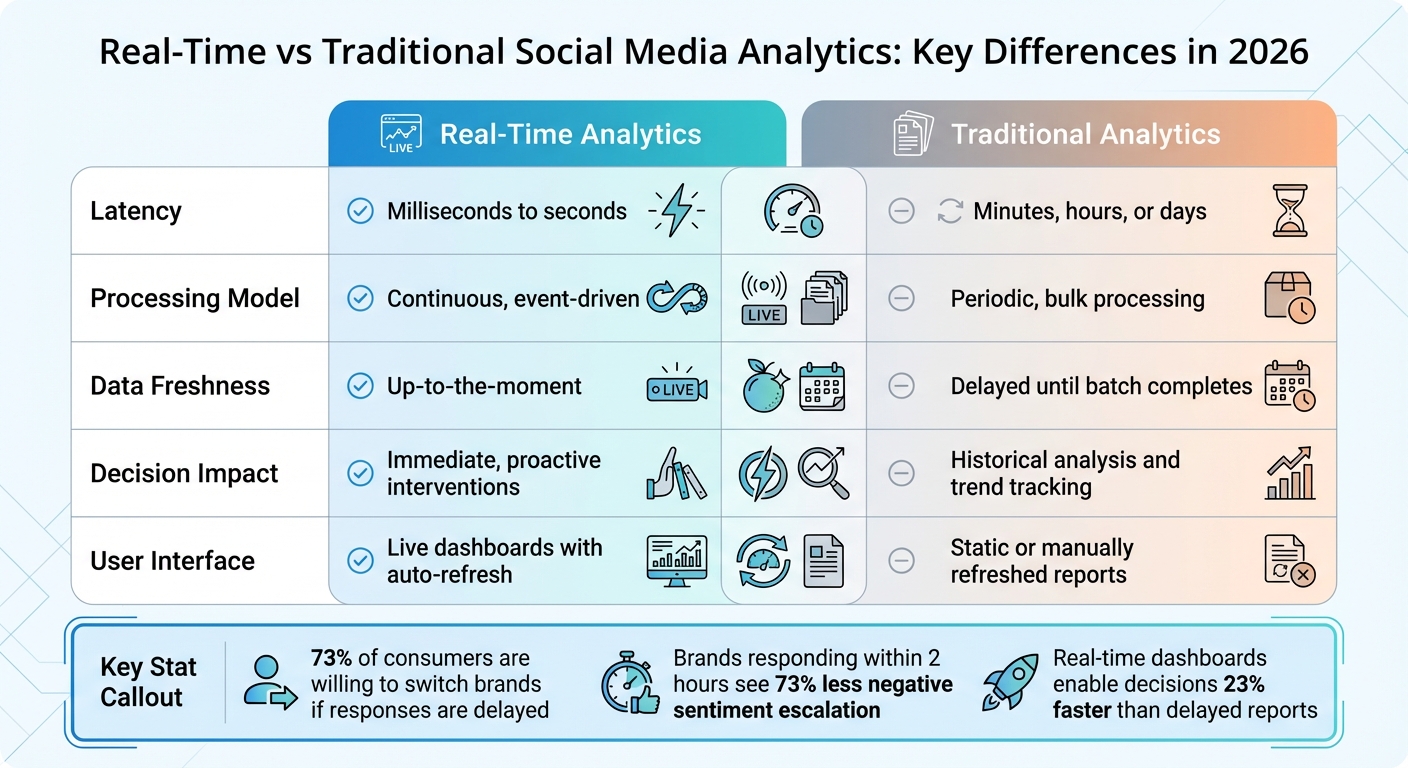
Real-Time vs Traditional Social Media Analytics Comparison 2026
Definition and Key Differences
Real-time social media analytics involves gathering, processing, and interpreting data instantly as events unfold, providing insights in the moment. Unlike traditional analytics, which often takes hours or even days to process data, real-time analytics gives you a live view of what’s happening - whether it’s a viral complaint on Twitter, a sudden surge in TikTok mentions, or a competitor’s campaign gaining momentum.
Traditional analytics relies on batch processing, leading to delayed insights that can leave brands playing catch-up. In contrast, real-time analytics shifts the focus to immediate, informed actions, enabling brands to stay ahead of the curve.
| Dimension | Real-Time Analytics | Traditional Analytics |
|---|---|---|
| Latency | Milliseconds to seconds | Minutes, hours, or days |
| Processing Model | Continuous, event-driven | Periodic, bulk processing |
| Data Freshness | Up-to-the-moment | Delayed until batch completes |
| Decision Impact | Immediate, proactive interventions | Historical analysis and trend tracking |
| User Interface | Live dashboards with auto-refresh | Static or manually refreshed reports |
Consider this example: In May 2025, Casey’s convenience stores cut their social media response time from three days to just three to five hours by adopting real-time monitoring. This 90% improvement addressed the fact that 73% of consumers are willing to switch brands if responses are delayed.
2026 Technology Shifts
The tools powering real-time analytics have advanced significantly. AI-driven predictive analytics now doesn’t just explain what’s happening - it forecasts future trends. Solutions like Brandwatch’s Iris AI and Talkwalker’s Blue Silk GPT can identify patterns and predict which topics or hashtags are likely to go viral based on current activity.
Visual intelligence has also become a game-changer. AI systems can now recognize brand logos, objects, and specific scenes in images and videos, capturing mentions that might otherwise go unnoticed on platforms like Instagram and TikTok. For brands, this means fewer missed opportunities in visual-first social spaces.
To handle viral moments and crises, chaos culture monitoring runs checks every five minutes - 288 times a day. Tools like "GenAI Lens" even allow businesses to track how they’re portrayed in AI-generated content from platforms like ChatGPT and Claude. Sentiment analysis has also grown more sophisticated, moving beyond simple positive/negative labels to detect nuanced emotions like frustration or excitement, thanks to contextual AI.
"Social listening provides real-time insights for strategic decision-making, especially during change." - Brian Wright, Head of Social Listening, Wells Fargo
Another innovation is micro-behavior tracking, which combines social data with Internet of Things (IoT) inputs. This enables brands to deliver hyper-personalized content and offers based on an individual’s immediate context and actions.
Benefits for Marketers
These technological advances translate into clear benefits for marketers. Real-time analytics is crucial for both crisis management and seizing opportunities. With 79% of customers expecting brands to respond to social media complaints within 24 hours, speed is no longer optional. For example, during its #Breaking2 campaign in 2025, Nike monitored over 13 million engagements in real time. This allowed the marketing team to adjust content and messaging on the fly based on shifting audience sentiment.
Real-time insights also boost revenue. Companies integrating real-time analytics into their advertising strategies have seen up to a 20% improvement in returns on marketing investments. Live dashboards empower marketers to pause underperforming campaigns or quickly reallocate budgets to more effective efforts.
Beyond revenue, the benefits extend to customer loyalty and visibility. 58% of business leaders report improved customer retention, while 83% of marketers have seen increased brand exposure through real-time social media monitoring. With 88% of consumers expecting prompt responses from brands on social media, the ability to act instantly differentiates market leaders from those who lag behind.
"You can't optimize what you don't measure. Real-time social media analytics is the secret weapon for businesses that want to stay ahead of the curve. It's about being proactive, not reactive." - Neil Patel
To make the most of these tools, set Boolean alerts using operators like AND, OR, and NOT to filter out irrelevant data. For instance, track mentions of “Apple” while excluding terms like “fruit” or “recipe”. Integrating analytics tools with Customer Relationship Management systems can provide a complete view of customer interactions across channels. Finally, use automated alerts with specific thresholds to avoid false alarms from normal traffic fluctuations.
Real-Time Metrics to Track
Basic Monitoring Metrics
Engagement velocity reflects how quickly your content garners likes, shares, and comments. Think of it as a speedometer for your posts. For instance, if a post gathers 500 interactions in its first hour - far exceeding your usual numbers - you might be looking at a viral moment or even a brewing crisis that needs immediate attention.
Share of voice (SOV) measures your brand's share of mentions in industry-related conversations. The formula is straightforward: (Your Brand Mentions / Total Industry Mentions) × 100. A drop from, say, 35% to 18% during a product launch could indicate that competitors are steering the conversation, signaling the need for a strategy overhaul.
Anomaly detection leverages automated tools to identify unusual patterns, like a 300% surge in mentions. Setting alerts for engagement spikes - such as a 200% increase compared to your 7-day average - can help you catch potential issues or opportunities on platforms like Twitter or TikTok before they escalate.
Visual brand mentions track instances where your logo or products appear in images or videos, even if they’re not tagged. This AI-driven feature uncovers hidden conversations and interactions on platforms like Instagram and TikTok, where text-based monitoring might miss key mentions.
These metrics cover the basics, but if you want to dig deeper into audience behavior, advanced metrics offer even more actionable insights.
Advanced Predictive Metrics
While basic metrics help you understand what's happening now, predictive metrics give you a glimpse into what’s coming next. Sentiment flux is one such metric, tracking shifts in emotional tone in real time. It goes beyond simple positive or negative labels to detect emotions like frustration, excitement, or confusion. By responding within the first two hours of a sentiment shift, brands have seen a 73% reduction in negative sentiment escalation.
"Real-time sentiment analysis uncovers tones, sentiments, and hidden emotions within customer feedback... helping you truly understand your customer's feelings." - Mihup
Intent signals use AI to classify posts by purpose, such as "purchase intent" or "support requests." For example, if someone tweets, "Does the new iPhone 16 work with older charging cables?" this could be flagged as a pre-purchase query and routed to your sales team while the lead is still warm. This approach has enabled some companies to generate 180 qualified leads in six months, achieving a 23% conversion rate compared to 8% from outbound email campaigns.
Predictive engagement forecasting analyzes historical data and current trends to estimate future audience activity. Using time-series models, this metric can predict viewership trends with about 88% accuracy, allowing you to reallocate resources mid-campaign to maximize the impact of high-performing content.
Metrics Reference Table
Here’s a quick-reference table summarizing key metrics, their definitions, tools, and actionable steps:
| Metric | Definition/Formula | Applicable Tools | Business Action |
|---|---|---|---|
| Engagement Velocity | Rate of mention growth over a specific time frame | Socialhose, Talkwalker, Brandwatch | Amplify viral content or activate crisis protocols |
| Sentiment Flux | Real-time shifts in emotional tone | Sprout Social, Brandwatch, Dash Social | Tweak messaging to counter negativity |
| Share of Voice (SOV) | (Brand Mentions / Total Industry Mentions) × 100 | Keyhole, Rival IQ, Talkwalker | Benchmark against competitors to refine strategy |
| Anomaly Detection | Flags data points exceeding 2–3× the standard deviation | Brandwatch (Iris AI), Sprinklr, Meltwater | Spot PR crises or technical issues early |
| Intent Signals | AI classification of posts by intent | Mention, HubSpot, Sprout Social | Route leads or queries to the right teams |
| Visual Brand Mentions | AI recognition of logos/products in visuals | Talkwalker, Brandwatch, Socialhose | Identify untagged mentions on visual platforms |
| Predictive Engagement | Forecasts future engagement based on past data | Sprout Social, Hootsuite | Optimize budgets and posting schedules |
To refine your monitoring, use Boolean logic (e.g., "Apple" AND NOT "fruit" OR "recipe") to filter out irrelevant data. Remember to focus your live dashboard on metrics that demand immediate action - anything that can wait 24 hours doesn’t belong there.
Top 7 Real-Time Analytics Tools for 2026
Now that you’re familiar with the key metrics to track, let’s dive into the tools that help you gather and analyze them. The tools available in 2026 go far beyond basic dashboards, offering features like AI-powered anomaly detection, logo recognition in visuals, and tracking mentions in AI-generated content. Whether you’re managing a PR crisis or following emerging trends, these platforms have something to offer. Below, we’ll explore their standout features, pricing, and practical use cases to help you decide which one fits your needs.
Brandwatch
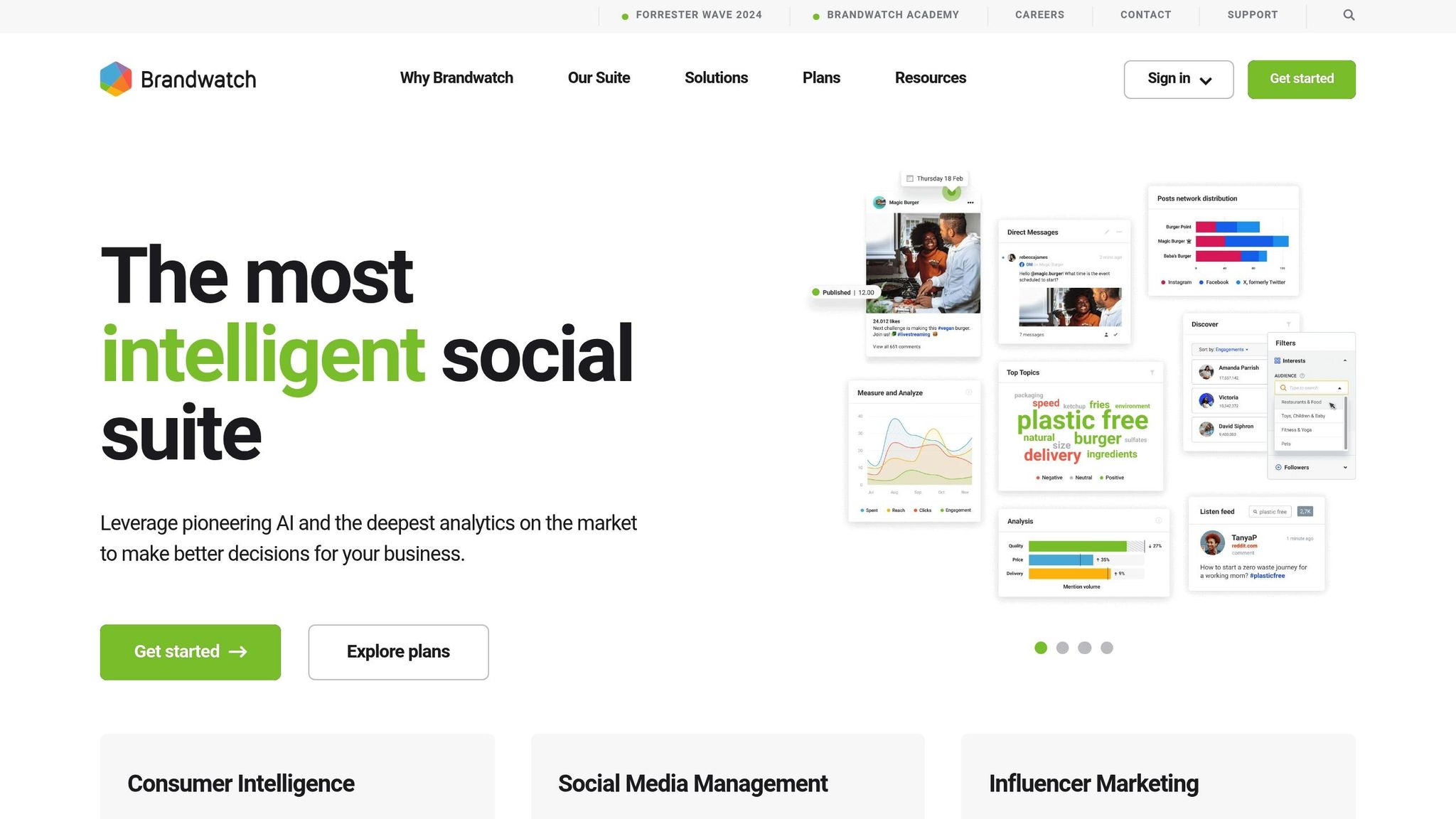
Brandwatch processes over 500 million posts daily, scanning social media, blogs, news outlets, and even archived print media going back to 2010. Its Iris AI identifies trending topics, while Image Insights detects logos or products in photos and videos, capturing mentions that aren’t explicitly tagged. In 2025, it expanded its capabilities to include Bluesky monitoring.
Key Features:
- Real-time Vizia dashboards with customizable widgets for sentiment analysis, share of voice, and geographic trends.
- Webhook functionality for instant Slack or CRM alerts when mentions exceed set thresholds.
Pricing:
Custom quotes available. Small businesses pay $800–$1,200/month, while enterprise plans start at $5,000/month.
| Pros | Cons |
|---|---|
| Extensive historical data (back to 2010) | Complex for new users to learn |
| 48+ filters for detailed segmentation | Pricing lacks transparency |
| Covers Bluesky, print, and broadcast media | Annual contracts may feel restrictive |
Workflow Example:
A consumer electronics company uses Iris AI to spot negative sentiment spikes, enabling them to act quickly and prevent issues from escalating.
Brand24
Brand24 focuses on delivering immediate alerts and offers straightforward pricing, making it a great option for mid-sized teams. Its AI Anomaly Detection explains sudden spikes in reach, like when a micro-influencer shares your post. The AI Brand Assistant also answers natural-language queries, such as "Which competitor had the most mentions this week?".
Key Features:
- Real-time notifications via email, Slack, or mobile push.
- Tracks social media, blogs, forums, podcasts, and news sites, with sentiment analysis that detects emotional tones.
Pricing:
Public pricing tiers are available, catering to startups and small businesses.
| Pros | Cons |
|---|---|
| Transparent pricing | Limited historical data compared to Brandwatch |
| AI simplifies anomaly explanations | Lacks extensive traditional media monitoring |
| Emotion detection adds depth to sentiment analysis | Fewer integrations than enterprise tools |
Workflow Example:
Uber’s Central & Eastern Europe team relies on Brand24 to monitor user reactions to service changes. Krzysiek Radoszewski, Marketing Lead for the region, notes:
"At Uber, we use social listening daily to understand how users feel about the changes we’re implementing. We know what’s well-received and what needs improvement."
Meltwater
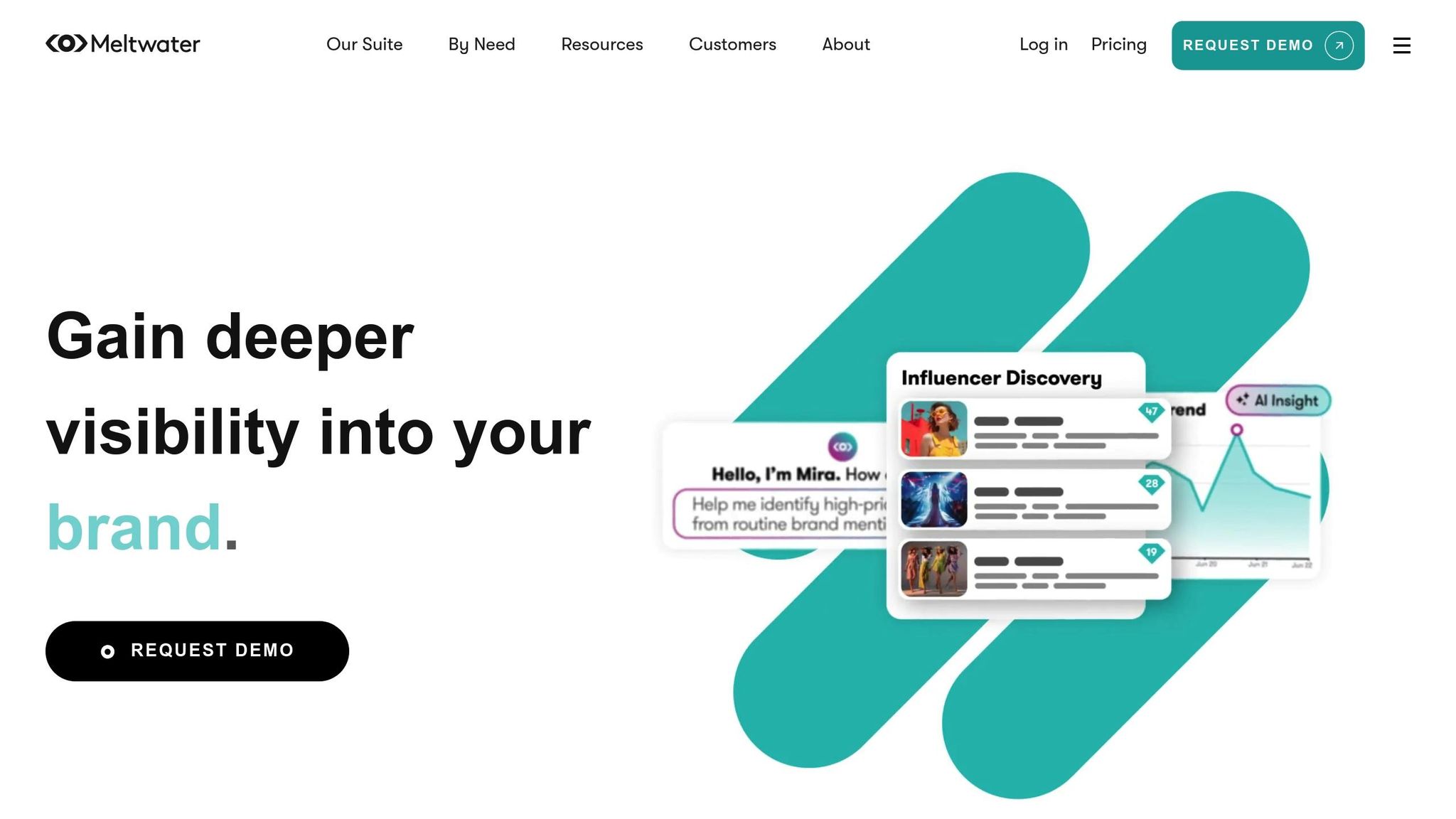
Meltwater combines social and traditional media monitoring, making it a favorite for PR professionals. Its GenAI Lens tracks mentions in AI-generated content, such as ChatGPT and Claude, while the Mira AI Assistant condenses large datasets into executive summaries.
Key Features:
- Predictive analytics integrated into real-time dashboards.
- Mira AI Assistant simplifies reporting by summarizing millions of mentions.
Pricing:
Custom enterprise contracts. Essentials plans range from $6,000–$12,000/year, with comprehensive suites exceeding $100,000/year.
| Pros | Cons |
|---|---|
| Tracks AI-generated content (GenAI Lens) | Aggressive sales tactics may deter some users |
| Covers global media (social + traditional) | No free trial; high initial commitment |
| Detailed competitive benchmarking | Overwhelming data for smaller teams |
Workflow Example:
A pharmaceutical company uses Meltwater to monitor regulatory news and public sentiment, allowing them to prepare statements ahead of competitor announcements.
Sprout Social
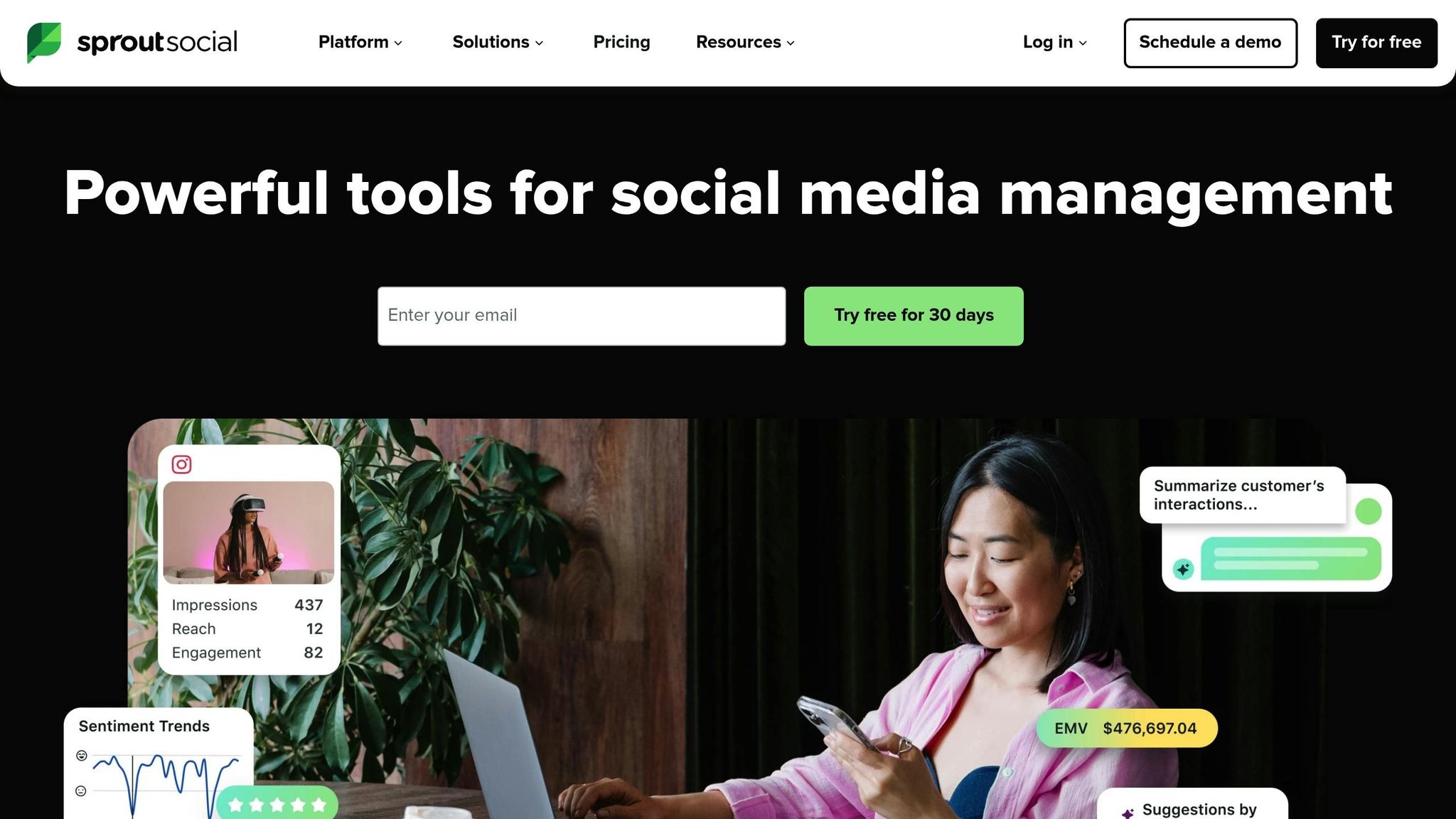
Sprout Social’s Smart Inbox consolidates all platform interactions - messages, comments, and mentions - into a single stream, perfect for teams handling high engagement volumes. It added TikTok monitoring in 2025 and introduced real-time alerts for sudden sentiment shifts.
Key Features:
- AI insights highlight trending topics and suggest optimal posting schedules.
- Team collaboration tools include task assignments and approval workflows.
Pricing:
Per-user pricing: Standard $199/month, Professional $299/month, Advanced $399/month. Social listening add-on: $3,000–$6,000/year.
| Pros | Cons |
|---|---|
| User-friendly interface | Costs can add up with per-user pricing |
| Smart Inbox simplifies team workflows | Social listening requires an additional fee |
| Comprehensive reporting tools | Limited historical data compared to Brandwatch |
Workflow Example:
A retail company’s customer service team uses the Smart Inbox to manage inquiries efficiently, preventing minor issues from escalating into public complaints.
Hootsuite
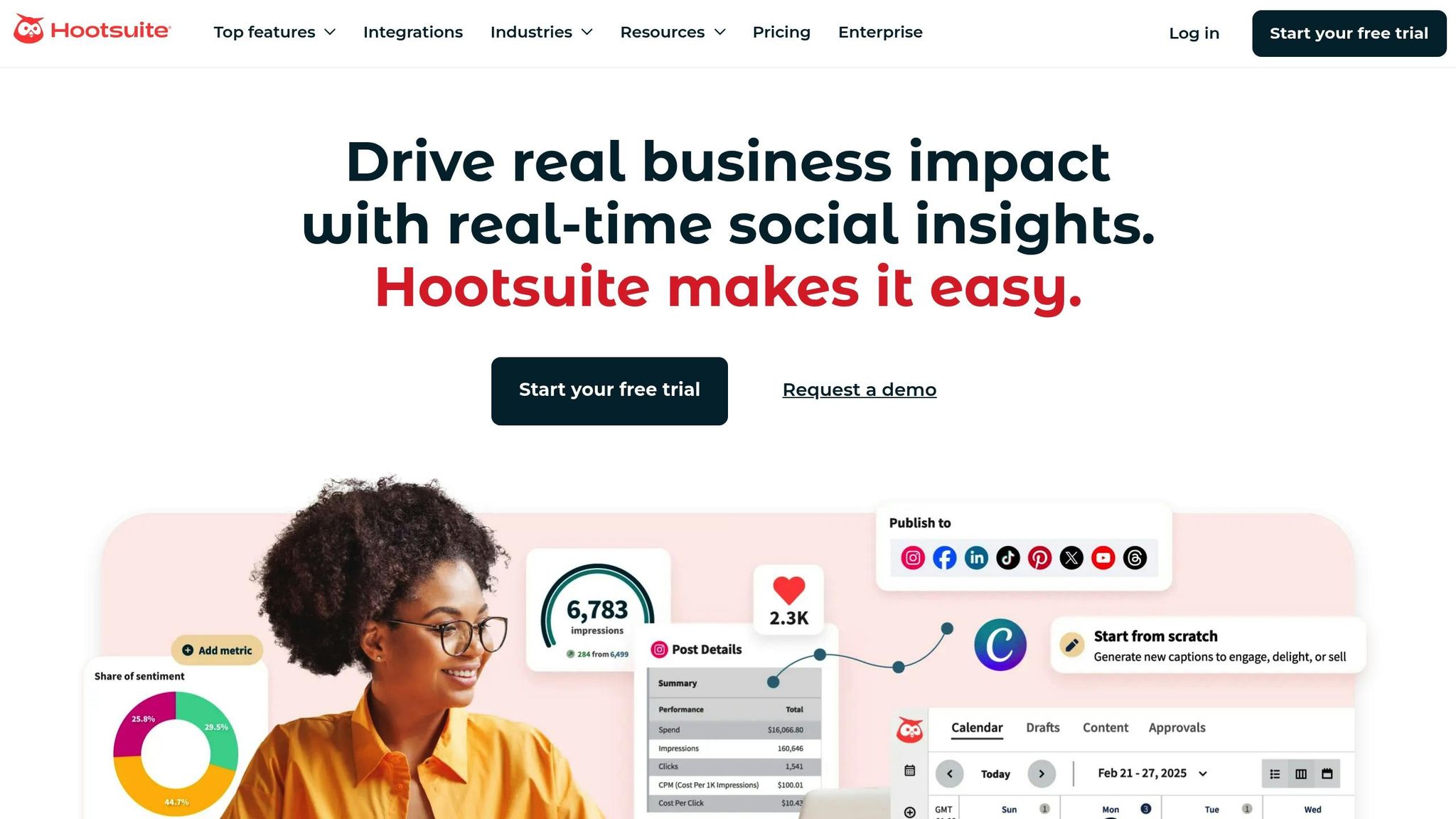
Hootsuite’s integration with Talkwalker enhances its dashboard with enterprise-level listening capabilities. It monitors over 30 channels, including Twitch, Pinterest, and Vimeo. Blue Silk™ AI streamlines research by forecasting trends and summarizing sentiment.
Key Features:
- Customizable streams provide low-latency monitoring.
- Webhooks enable automated responses via Slack or email when specific keywords trend.
Pricing:
Starts at $49/month for small businesses. Talkwalker-powered features are available in Enterprise tiers.
| Pros | Cons |
|---|---|
| Covers 30+ platforms | Advanced features are limited to Enterprise plans |
| Blue Silk™ AI for trend analysis | Interface may feel cluttered for newcomers |
| Familiar for Hootsuite users | Mid-tier plans lack depth in real-time features |
Talkwalker
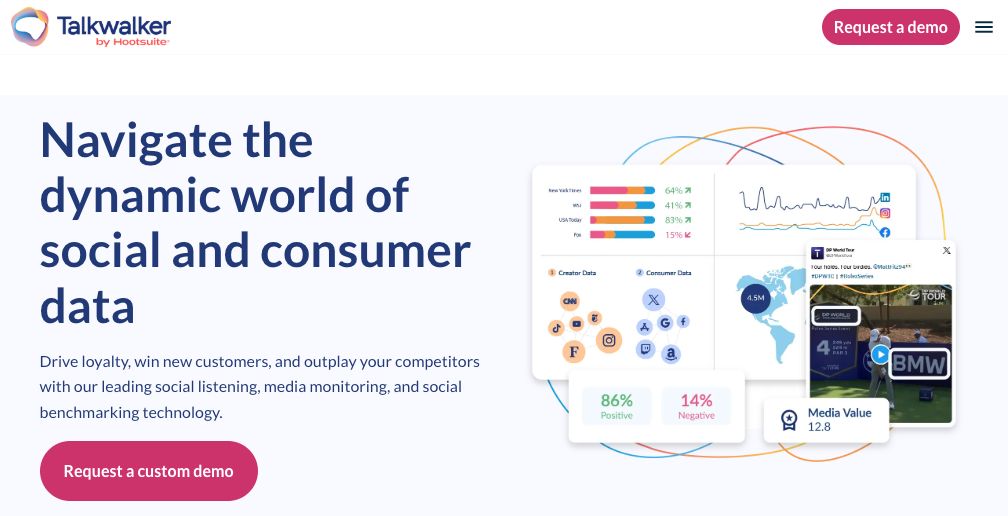
Now part of Hootsuite, Talkwalker excels at visual and audio brand recognition. Its AI can identify logos in YouTube videos, Instagram Stories, and TikTok clips, making it invaluable for tracking influencer campaigns and user-generated content.
Key Features:
- Real-time alerts with automated crisis management.
- Blue Silk™ AI analyzes image, video, and audio content alongside sentiment trends.
Pricing:
Enterprise-only, with custom quotes based on usage.
| Pros | Cons |
|---|---|
| Advanced visual and audio recognition | Pricing structure can be unclear |
| Tracks 150M+ websites across 239 countries | Overwhelming data for smaller teams |
| Logo detection in videos without text tags | Learning curve for new users |
Workflow Example:
Grand Canyon Education uses Talkwalker to track trending topics in education. Jacqueline M., Social Media Marketing Manager, shares:
"Talkwalker helps our brand monitor trending topics and mentions across the web. Our social media team can quickly pull reports, view dashboards, and stay informed."
Agorapulse
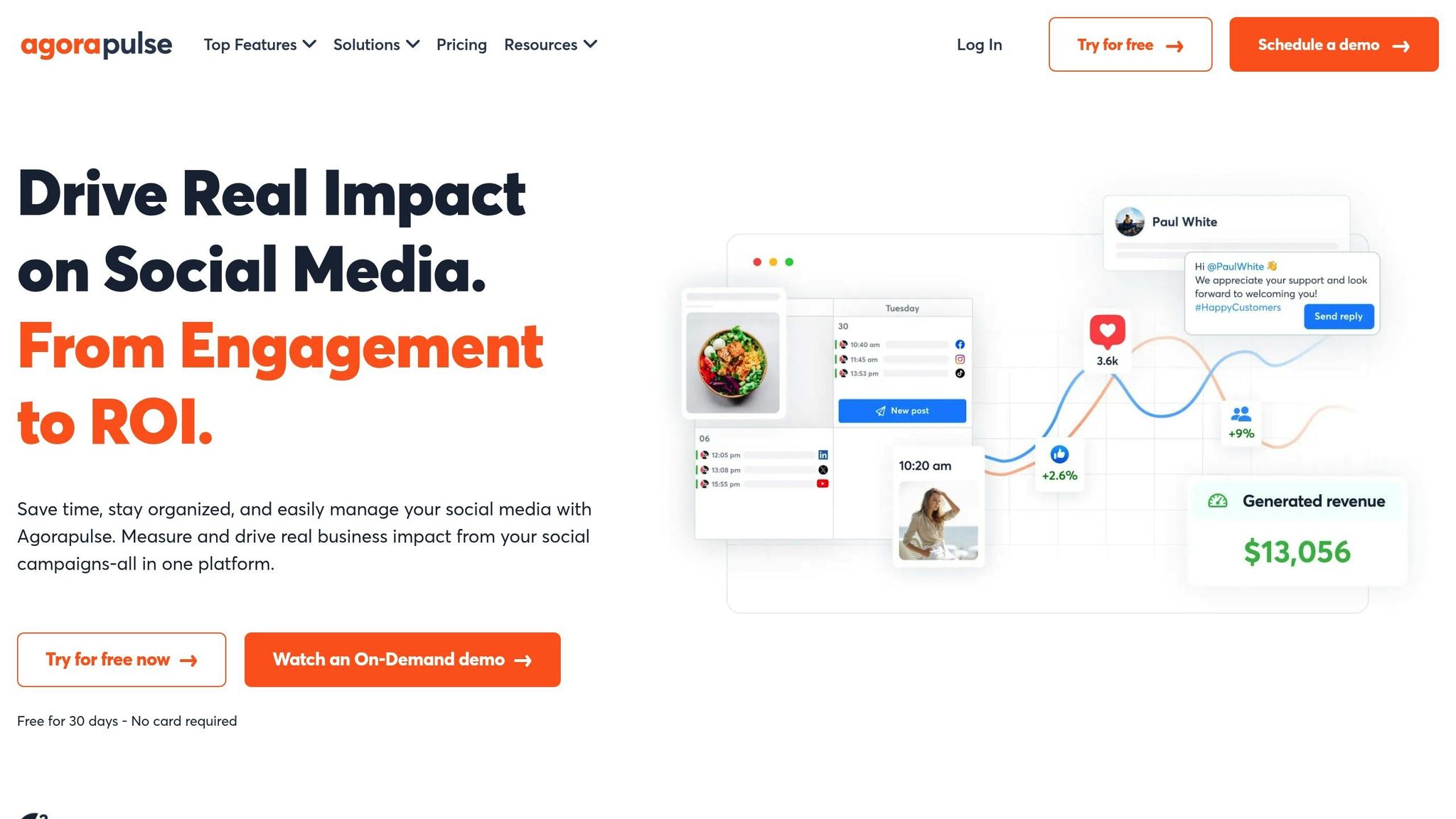
Agorapulse is tailored for small businesses, offering an intuitive interface and a Social Media ROI dashboard that integrates with Google Analytics to measure leads and sales from social interactions.
Key Features:
- Real-time monitoring with a unified inbox for managing engagement across platforms.
Pricing:
Public pricing tiers designed for small business budgets.
| Pros | Cons |
|---|---|
| Easy to use | Limited advanced features for larger enterprises |
| Budget-friendly | Historical data and integrations may fall short for complex needs |
sbb-itb-b3cfc51
Tool Comparison Table
Picking the right tool comes down to your specific needs - whether that's crisis tracking, managing multiple channels, or analyzing consumer sentiment. The table below compares seven leading tools based on features like alert speed, platform coverage, pricing, and overall performance.
| Tool | Live Sentiment Analysis | Alert Latency | Supported Platforms (10+) | Pricing 2026 | Score (1-10) | Best For |
|---|---|---|---|---|---|---|
| Brandwatch | Iris AI pattern detection + Image Insights | Near real-time | ✅ 100M+ sources (Social, News, Print, Broadcast, Bluesky) | $800–$5,000+/month | 9.5 | Global enterprise intelligence & historical research |
| Brand24 | Emotion AI (Anger, Fear, Joy, Sarcasm) | Near real-time | ✅ FB, IG, X, TikTok, YT, Podcasts, Blogs, Forums | $50–$300+/month | 8.5 | SMB reputation management with transparent pricing |
| Meltwater | AI tagging + GenAI Lens (LLM tracking) | Real-time | ✅ Social, News, Broadcast, Podcasts, Reddit | $6,000–$100,000+/year | 9.0 | PR teams tracking traditional and digital media |
| Sprout Social | Standard AI sentiment | Real-time (add-on required) | ✅ FB, IG, X, LinkedIn, Reddit, YT, TikTok | $199–$399/user/month + listening add-on of $3,000–$6,000/year | 8.0 | Unified social management with team collaboration |
| Hootsuite | Blue Silk™ AI forecasting | Real-time | ✅ 30+ channels (Twitch, Vimeo, Pinterest, etc.) | $49+/month (Enterprise for advanced features) | 8.0 | Multi-platform monitoring with trend forecasting |
| Talkwalker | Blue Silk™ AI + Visual/Audio recognition | Instant (sentiment shifts) | ✅ 30+ social channels, 150M websites, 239 countries | Custom (Enterprise only) | 9.5 | Deep consumer research & logo detection in videos |
| Agorapulse | Basic (Positive/Negative/Neutral) | Real-time | ✅ FB, IG, X, LinkedIn, TikTok, YT | Public tiers (SMB-friendly) | 7.5 | ROI-focused small businesses with Google Analytics integration |
Comparison Analysis
For crisis monitoring, Talkwalker stands out with instant alerts, scanning 150 million websites across 239 countries. Meanwhile, Brandwatch processes over 500 million posts daily. If you need response times under five minutes during a reputation crisis, consider tools with rapid polling capabilities.
Small to mid-sized teams might prefer Brand24 for its transparent pricing and Emotion AI, which identifies nuanced customer feelings like frustration versus anger. Sprout Social combines publishing and engagement features with listening, but the required add-on (at $3,000–$6,000/year) could push costs higher.
Enterprise teams managing large-scale campaigns will find Meltwater's GenAI Lens particularly useful. It tracks brand mentions in AI-generated content from tools like ChatGPT and Claude, addressing a growing need as 61% of social listening professionals report challenges with fragmented data sources. Brandwatch also offers a unique edge with its historical archive dating back to 2010, enabling long-term trend analysis.
For small businesses, Agorapulse provides a user-friendly interface and ROI-focused tools, including a Social Media ROI dashboard that integrates with Google Analytics. Hootsuite’s $49/month plan covers over 30 platforms, but advanced Blue Silk™ AI features require an Enterprise upgrade.
Custom Dashboard Code Example
Using these insights, you can build a custom dashboard to trigger actionable alerts. Here's an example of how to integrate API data for real-time mentions and alerts when negative sentiment spikes:
import requests

def fetch_live_mentions(api_key, brand_query):
    """
    Fetches real-time mentions with sentiment filtering.
    Use forceLatest=true to bypass caching during crises.
    """
    url = "https://api.social-intelligence-tool.com/v1/monitor"
    headers = {"Authorization": f"Bearer {api_key}"}
    params = {
        "query": brand_query,  # e.g., '("BrandName" OR "@BrandHandle")'
        "platforms": "twitter,instagram,reddit",
        "sentiment": "negative",
        "forceLatest": "true",  # Guarantees fresh data
        "limit": 50
    }

    response = requests.get(url, headers=headers, params=params)
    return response.json()

# Example: Trigger Slack alert if negative mentions exceed threshold
data = fetch_live_mentions("YOUR_API_KEY", "YourBrand")
negative_count = len(data['results'])

if negative_count > 20:  # Threshold: 20 negative mentions in polling window
    print(f"⚠️ CRISIS ALERT: {negative_count} negative mentions detected!")
    # Integrate with Slack webhook or PagerDuty for team notifications
For visual dashboards, many tools offer native integrations. Brandwatch and Talkwalker work seamlessly with Tableau and Power BI, while Sprout Social connects to Grafana for custom real-time visualizations. Companies using real-time analytics dashboards reportedly make decisions 23% faster than those relying on traditional reporting, giving them a clear edge in competitive environments.
How to Build a Real-Time Analytics Workflow
Creating a real-time analytics workflow involves linking the right data sources, filtering out irrelevant information, and setting up alerts that matter. The first step? Define the decisions you want to streamline. Are you monitoring a product launch, managing a crisis, or tracking performance benchmarks? Your workflow should answer specific questions, not just present a collection of dashboards.
Technically, a real-time workflow is built on three main layers: data ingestion (using APIs or webhooks), processing (like sentiment analysis), and visualization (live charts and alerts). To keep things simple, start with three to five key metrics. Prove their importance before expanding further. With that in mind, here’s how you can build an efficient real-time analytics workflow.
8-Step Workflow Setup
- Define Intelligence Requirements: Identify three to five critical questions your workflow needs to answer. For example, "Is a checkout bug impacting customer sentiment?" or "Are competitors rolling out new products?".
- Audit Data Sources: List all your data sources - social APIs, website analytics, CRM tools, payment systems - and note how often they update (real-time, hourly, daily). This helps ensure your pipeline can handle the data flow.
- Select Your Tech Stack: Pick tools for ingestion (e.g., Apache Kafka or AWS Kinesis), processing (like natural language processing for sentiment analysis), and storage (such as InfluxDB for fast queries). If you’re using a comprehensive platform, these components might already be integrated.
-
Construct Boolean Queries: Use Boolean logic to refine your data collection. For instance, a query like
("YourBrand" OR "@YourHandle") NOT "fruit"filters out irrelevant mentions, letting your dashboard focus on meaningful insights. - Connect APIs and Webhooks: Integrate your data sources into a unified system. Webhooks are great for instant alerts (like Slack or email notifications), helping you avoid delays caused by periodic polling.
- Enrich Data with AI: Apply AI tools for sentiment analysis, emotion detection (e.g., joy, anger, sarcasm), and entity extraction. This transforms raw data into actionable insights, making it easier to spot trends or issues.
- Build Visualization Dashboards: Create dashboards with time-series charts and live feeds. Prioritize key metrics so they’re visible without scrolling, and use clear color coding - red for problems, green for positive trends. Tools like Grafana, Tableau, or Power BI can help you design these views.
- Set Intelligent Alerts: Use historical data to define alert thresholds. For example, trigger an alert if negative sentiment spikes 200% over a 7-day average. Send these alerts through multiple channels (Slack, email, push notifications), but keep them under five per dashboard to avoid overwhelming your team.
Common Problems and Solutions
Even with a solid setup, challenges can arise. Here's how to tackle some common issues:
| Problem | Solution |
|---|---|
| Alert Fatigue | Limit alerts to metrics requiring immediate action - no more than five per dashboard. |
| Data Overload | Use Boolean filters (e.g., NOT "irrelevant term") to reduce noise at the source. |
| High Streaming Costs | Only stream essential data; batch updates can handle non-critical metrics. |
| Slow Dashboard Loading | Use time-series databases for faster queries and implement smart caching. |
| Integration Struggles | Opt for APIs that normalize data structures across platforms (e.g., Twitter and Instagram). |
One frequent mistake is setting alerts for every mention. Instead, focus on high-impact triggers, like mentions from accounts with over 10,000 followers or a sudden 200% spike in negative sentiment. This keeps your team focused on what truly matters.
Alert Script Example
Here’s a JavaScript snippet to set up an alert for high-engagement, negative mentions:
// Real-time Sentiment Alert System
async function checkSocialMentions(mentionData) {
  const ALERT_WEBHOOK_URL = 'https://hooks.slack.com/services/YOUR/WEBHOOK/URL';
  const NEGATIVE_THRESHOLD = -0.5; // Sentiment scale: -1 (very negative) to 1 (very positive)
  const ENGAGEMENT_THRESHOLD = 100; // Focus on high-visibility posts

  mentionData.forEach(mention => {
    // Trigger alert if sentiment is highly negative and engagement is high
    if (mention.sentimentScore <= NEGATIVE_THRESHOLD && mention.engagementCount > ENGAGEMENT_THRESHOLD) {
      sendSlackAlert(ALERT_WEBHOOK_URL, mention);
    }
  });
}

async function sendSlackAlert(webhookUrl, mention) {
  const payload = {
    text: `⚠️ CRISIS ALERT: High-engagement negative mention detected!`,
    blocks: [
      {
        type: "section",
        text: {
          type: "mrkdwn",
          text: `*Platform:* ${mention.platform}\n*Sentiment Score:* ${mention.sentimentScore}\n*Engagement:* ${mention.engagementCount} interactions\n*Link:* ${mention.url}`
        }
      }
    ]
  };

  await fetch(webhookUrl, {
    method: 'POST',
    headers: { 'Content-Type': 'application/json' },
    body: JSON.stringify(payload)
  });
}

// Example: Fetch mentions every 5 minutes (Crisis Mode)
setInterval(async () => {
  const mentions = await fetchLiveMentions('YourBrand', 'forceLatest=true');
  checkSocialMentions(mentions);
}, 300000); // 5 minutes = 300,000 milliseconds
This script scans for mentions with high engagement and negative sentiment, then sends alerts to Slack. For more advanced workflows, you could integrate tools like PagerDuty or Asana to assign tasks directly to your response team.
Advanced Strategies and Case Studies
2026 Strategies
In 2026, leading teams are staying ahead by predicting trends and leveraging cutting-edge tools. For example, AI models like Iris AI and visual recognition are used to track emerging themes and even detect untagged logo appearances in content. Meanwhile, Emotion AI 2.0 takes sentiment analysis to the next level, categorizing tone into over a dozen emotional states. This allows teams to prioritize responses - for instance, addressing a frustrated customer with a large following before a mildly positive comment from a smaller account.
Another game-changer is Trigger Crisis Mode, which activates when mentions spike beyond 200% of the 7-day average. This feature provides a critical 5-minute window for immediate action. Additionally, network mapping tools visualize influencer connections and audience overlaps, enabling teams to identify key partnerships or manage potential crises more effectively. Combined with live dashboards, these tools streamline outreach and resolution strategies.
These strategies come to life through real-world examples. Below are four case studies that showcase how businesses have turned these advanced tactics into measurable success.
4 Case Studies
Summer Friday's
The beauty brand Summer Friday's used AI-driven social listening to track real-time conversations about their products. This allowed them to make quick adjustments to their campaigns, resulting in a 40% boost in cross-channel engagements within just three months.
U-Haul International
U-Haul International managed interactions across over 20 regional accounts using Talkwalker. By prioritizing engagement based on real-time sentiment scores, their team cut response times by 35% without sacrificing quality.
"Over the last couple of years, our relationship with Hootsuite has allowed us to create social media marketing strategies that have helped us [prioritize where to spend time]." - Elnora Cunningham, Director of Social Media Marketing at U-Haul International
Grand Canyon Education
Grand Canyon Education took a different approach, using real-time dashboards to counter misinformation quickly. Their team could instantly generate reports during high-traffic periods, enabling them to address issues or amplify positive student stories within minutes.
"Talkwalker helps our brand monitor trending topics and mentions across the web. Our social media team is able to quickly and seamlessly pull reports, look at dashboards, and keep informed." - Jacqueline M., Social Media Marketing Manager at Grand Canyon Education
Fix My Curls
When Fix My Curls noticed a sudden spike in customer mentions, their team quickly identified a marketplace scam involving counterfeit products. Within two hours, they launched an educational campaign and offered replacements to affected customers. This swift action not only protected their reputation but also strengthened customer loyalty. It’s a clear example of how anomaly detection and a rapid response can turn a potential crisis into an opportunity to build trust.
Conclusion
In 2026, real-time social media analytics isn't just a nice-to-have - it’s a game-changer. It allows businesses to respond to crises within minutes, identify trends faster, and make decisions 23% faster. The evolution from delayed reporting to instant insights transforms raw social data into actionable strategies. Whether you're steering a Fortune 500 company or running a fast-growing startup, the right tools, metrics, and workflows can turn social monitoring into a powerful competitive advantage.
The secret lies in aligning your business needs with the right platform. For enterprise teams managing global consumer intelligence, tools like Brandwatch and Talkwalker offer extensive historical data and advanced AI capabilities. Mid-sized brands focused on crisis management might prefer SOCIALHOSE, with its 5-minute Crisis Mode, or Brand24, featuring Emotion AI 2.0 for tracking nuanced sentiment changes. Meanwhile, small businesses and creators can start with affordable, user-friendly options like Buffer or Agorapulse and expand as their needs grow.
To get started, focus on three to five key metrics - such as engagement velocity, sentiment spikes, or conversion rate changes - to create a streamlined dashboard. Use intelligent alerts sparingly, flagging only the metrics that require immediate attention to keep workflows manageable. Here’s a quick summary of the best tools for specific business challenges in 2026:
| Business Need | Recommended Tool | Why It Works |
|---|---|---|
| Crisis Management | SOCIALHOSE, Sprinklr | 5-minute Crisis Mode identifies early signs of negative sentiment |
| Deep Consumer Research | Brandwatch, Talkwalker | Historical data back to 2010 and AI-powered trend forecasting |
| Budget-Conscious Monitoring | Buffer, Agorapulse | Affordable pricing starting at $6/month with user-friendly interfaces |
| Visual Brand Tracking | YouScan, Talkwalker | AI image recognition finds logos in photos, even without text tags |
| B2B/SaaS Intelligence | Octolens, Brandwatch | Specialized tracking for platforms like LinkedIn, GitHub, and industry forums |
| Campaign ROI Tracking | Agorapulse, Sprout Social | Google Analytics integration connects social activity to revenue |
Real-time analytics is more than a technological shift - it’s a strategic necessity. Brands that act on data within minutes stay ahead of the curve. With the right tools and workflows, you can turn analytics into a true competitive edge.
FAQs
What are the main benefits of using real-time social media analytics in 2026?
In 2026, real-time social media analytics are reshaping how brands operate, offering quicker decision-making, immediate crisis response, and the ability to seize trends as they happen. With live data analysis and AI-powered insights, businesses can react to customer feedback, viral moments, or potential issues in seconds. This speed not only safeguards their reputation but also helps fine-tune campaigns in real time.
These tools go beyond basic metrics, tracking things like shifts in sentiment, how quickly engagement builds, and subtle audience behaviors. This constant flow of insights gives businesses a better grasp of what their audience wants and feels. The result? Smarter predictions, sharper content strategies, and happier customers - all of which help brands stay ahead in today’s fast-paced digital landscape.
How do tools like Brandwatch and Talkwalker improve decision-making with real-time analytics?
Real-time analytics tools like Brandwatch and Talkwalker give decision-makers the ability to act fast by providing instant insights into trends, crises, and shifts in public sentiment. Take Brandwatch, for instance - it uses live monitoring and predictive alerts to flag sudden spikes in mentions or changes in sentiment. This allows teams to jump into action quickly, addressing potential issues before they spiral out of control.
On the other hand, Talkwalker leverages AI-powered social listening to analyze millions of conversations as they happen. It summarizes crucial takeaways and pinpoints actionable opportunities, turning what might feel like an overwhelming flood of social data into clear, structured insights. These tools help businesses stay ahead by enabling quicker, smarter decisions in the fast-paced digital world of 2026.
What are the best strategies for predicting social media trends in 2026?
To get a glimpse of where social media might be heading in 2026, brands are leaning heavily on AI-powered tools and real-time analytics. These technologies dig into data points like engagement speed, shifts in sentiment, and subtle user behaviors to predict trends before they hit the mainstream. This gives businesses the chance to tweak their campaigns early and stay ahead of the competition.
Another smart move is leveraging predictive alerts. These alerts flag emerging trends or potential crises as they start to build momentum. Whether it’s amplifying a positive buzz or addressing a brewing issue, brands can act swiftly. Real-time dashboards, which pull data from various platforms and incorporate AI-driven sentiment analysis, offer a clear snapshot of what audiences care about at any given moment. This makes spotting and responding to micro-trends a lot easier.
By blending these advanced tools and strategies, businesses can not only anticipate trends but also make quicker, smarter decisions in the ever-evolving world of social media.