Feeling buried under endless social media metrics? You're not alone. With 5.6 billion people scrolling in 2026, managing performance data isn't just a headache - it’s a full-time job. But here's the kicker: 90% of reporting tasks are now automated, slashing hours of manual work into just minutes.
The fix? All-in-one social media analytics platforms. These tools pull data from Instagram, TikTok, LinkedIn, and more into one dashboard, cutting the chaos. Whether you're tracking engagement, monitoring competitors, or analyzing content with AI, these platforms are designed to save time and sharpen your strategy.
Here’s the quick lowdown:
- Social Status: Best for agencies juggling multiple clients.
- RivalIQ: Competitive benchmarking pro.
- Social Insider: AI-powered insights for content trends.
- Brandmentions: Real-time reputation monitoring.
- Cyfe: Merges social data with business KPIs.
- Keyhole: Hashtag and influencer tracking on a budget.
- MagicBrief: Perfect for creative teams managing ad campaigns.
Bottom line? These tools don’t just track numbers - they show you what works, what doesn’t, and where to focus your efforts. Ready to find the one that fits your needs? Let’s dive in.
What Is an All-in-One Social Media Analytics Platform?
Imagine one dashboard pulling together data from Facebook, Instagram, TikTok, LinkedIn, X (Twitter), and YouTube. That’s the power of an all-in-one social media analytics platform - a single hub that eliminates the hassle of jumping between apps or manually piecing reports together. These platforms combine tools like social listening, automated reporting, custom dashboards, and multi-channel analytics, making them a go-to solution for marketers.
Here’s the key difference: while platforms like Meta Business Suite or LinkedIn Analytics only show data from their respective networks, and hashtag trackers focus on limited tasks, all-in-one platforms bring everything together. They connect content planning directly to performance tracking. In fact, automated platforms now handle 90% of reporting tasks, saving marketers hours of manual work.
The demand for these platforms is skyrocketing. Social media analytics is expected to grow from $13.83 billion in 2024 to $17.32 billion by 2026. With 65% of the global population active on social media, brands need tools that can handle massive amounts of engagement data. Advanced platforms even track over 250 unique KPIs, giving marketers detailed insights to refine their strategies.
Let’s break down the features that make these platforms indispensable.
Key Features of All-in-One Platforms
These platforms stand out because of their ability to consolidate metrics across multiple channels into one seamless view. But that’s just the start. Social listening takes it further, tracking brand mentions, industry keywords, and even analyzing public sentiment in real time.
Automated reporting is another game-changer - it lets you schedule reports (daily, weekly, or monthly) that are automatically sent to stakeholders in formats like PDF, CSV, or PPTX. Then there’s real-time analytics, which offer live dashboards with customizable widgets to track key metrics like engagement, reach, and ROI as they happen.
The newest twist? AI-driven insights. These tools now predict content success, suggest optimal posting times, and even explain why certain metrics change with "Key Insights Summaries". Some platforms use AI for sentiment analysis with an impressive 85-92% accuracy for English content, even picking up sarcasm in customer mentions.
Why Social Media Managers Need These Tools
Time is money, and these platforms save plenty of it. Tasks that used to take hours - like gathering data or creating reports - are now automated. This frees up marketers to focus on strategy instead of being bogged down by manual work. Automated reporting ensures stakeholders stay updated without extra effort, and competitive benchmarking helps you measure your performance against rivals to find gaps and opportunities.
"Social listening is a PR pro's secret sauce for understanding the collective mind of the public, their feelings, likes, dislikes and ultimately, what their needs are." – Jenny Griesdorn
Beyond saving time, these tools empower data-driven decisions. They calculate the "organic value" of campaigns, showing what that same reach would’ve cost through paid ads. They also highlight which channels deliver the most value, helping you allocate budgets more effectively. For agencies managing multiple clients or brands, features like "brand-level rollups" bring all social accounts under one umbrella, making it easier to analyze overall performance.
The bottom line? These platforms deliver faster insights, smarter strategies, and a clearer path to success.
sbb-itb-b3cfc51
Top Platforms Compared in 2026
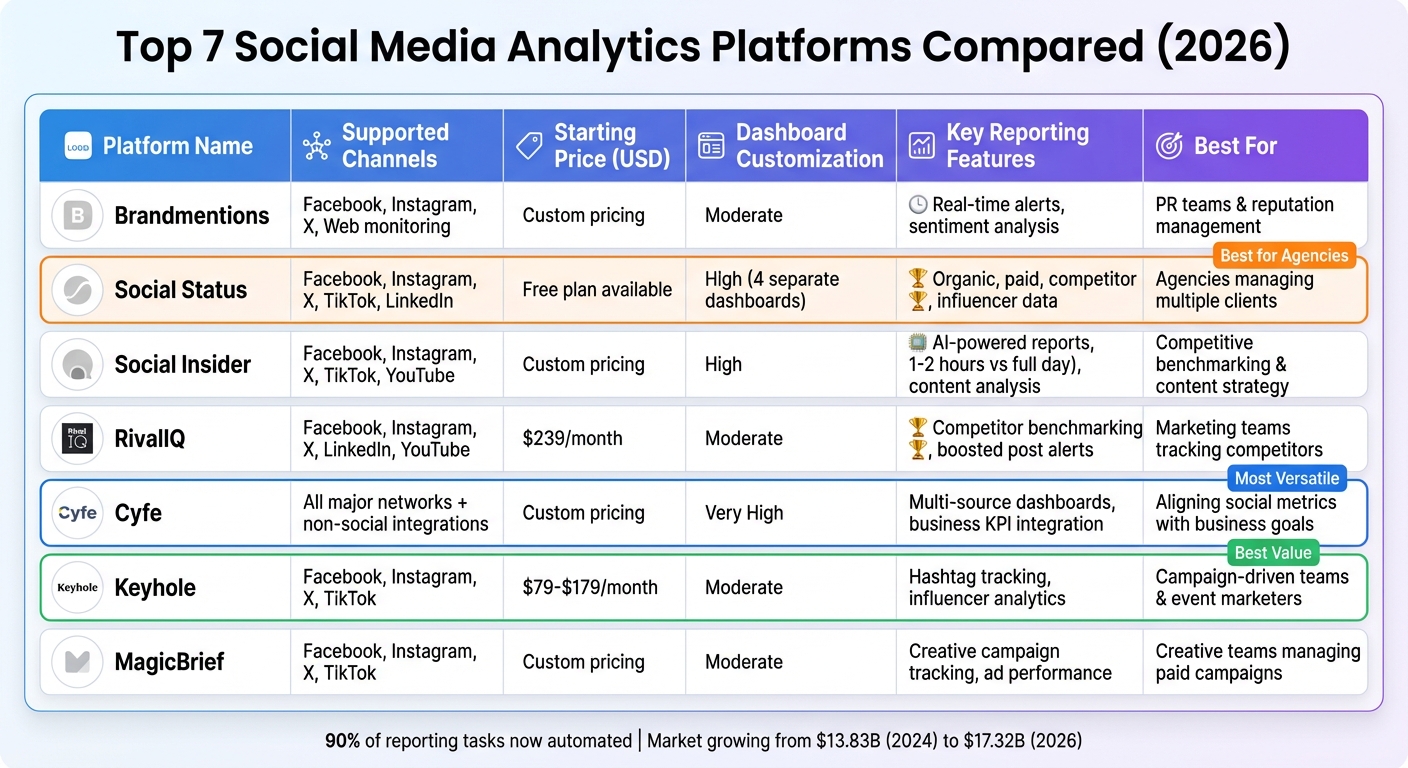
2026 Social Media Analytics Platforms Comparison Chart
In 2026, tools like Brandmentions, Social Status, Social Insider, RivalIQ, Cyfe, Keyhole, and MagicBrief are dominating the market. Each one has carved out a niche, offering specific features tailored to different needs. For example, Brandmentions shines with next-gen social media monitoring, while Social Status is perfect for multi-dashboard reporting. Social Insider delivers fast, AI-powered insights, and RivalIQ focuses on competitive intelligence. These platforms thrive on multi-channel integration and AI features, making them essential for tracking social media performance.
When it comes to pricing, there's a wide range. Social Status has a free plan, RivalIQ starts at $239/month, and Keyhole offers plans between $79 and $179/month, depending on the features you need.
Brandmentions
Brandmentions keeps tabs on your brand across social platforms, blogs, forums, and even news sites in real time. Its sentiment analysis tool flags mentions as positive, negative, or neutral, which is a huge help for PR teams needing to act fast on reputation issues. Plus, it tracks competitors' mentions, giving you a clear picture of where your brand stands in the conversation.
Pros: Real-time alerts, wide web coverage beyond social media, competitive tracking
Cons: Lacks robust social media posting tools, smaller scale compared to enterprise solutions
Best for: PR teams and brands focused on managing reputation and handling crises
Social Status
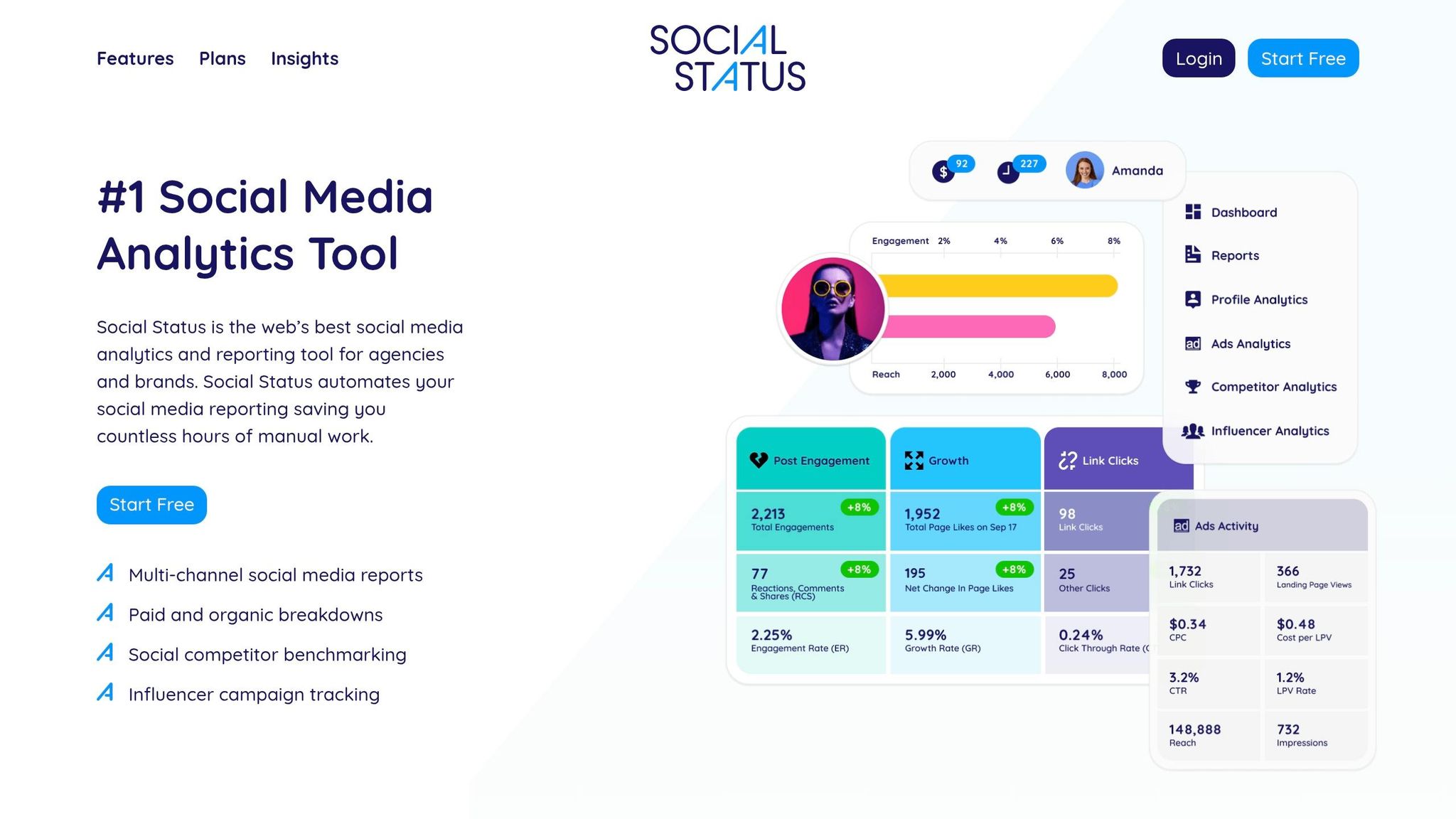
Social Status stands out with its four separate dashboards for organic, paid, competitor, and influencer data. This structure allows users to analyze each area without mixing metrics, making it a favorite for agencies and small businesses alike. It’s especially handy for social media managers juggling multiple performance metrics.
Pros: Four distinct dashboards, free plan available, strong reporting features for agencies
Cons: Limited integrations with non-social tools
Best for: Agencies managing multiple clients and small businesses tracking both organic and paid performance
Social Insider
Social Insider is all about competitive benchmarking and cross-platform analysis. The platform can whip up detailed reports in as little as 1–2 hours, a task that used to take an entire day. It also identifies which "content pillars" are driving success in your industry, giving marketers the insights they need to refine their strategies.
Pros: Automated, AI-driven reporting, industry-specific insights, strong competitor analysis
Cons: Steeper learning curve for teams new to competitive benchmarking
Best for: Brands looking to outpace competitors and content teams fine-tuning their strategies
RivalIQ
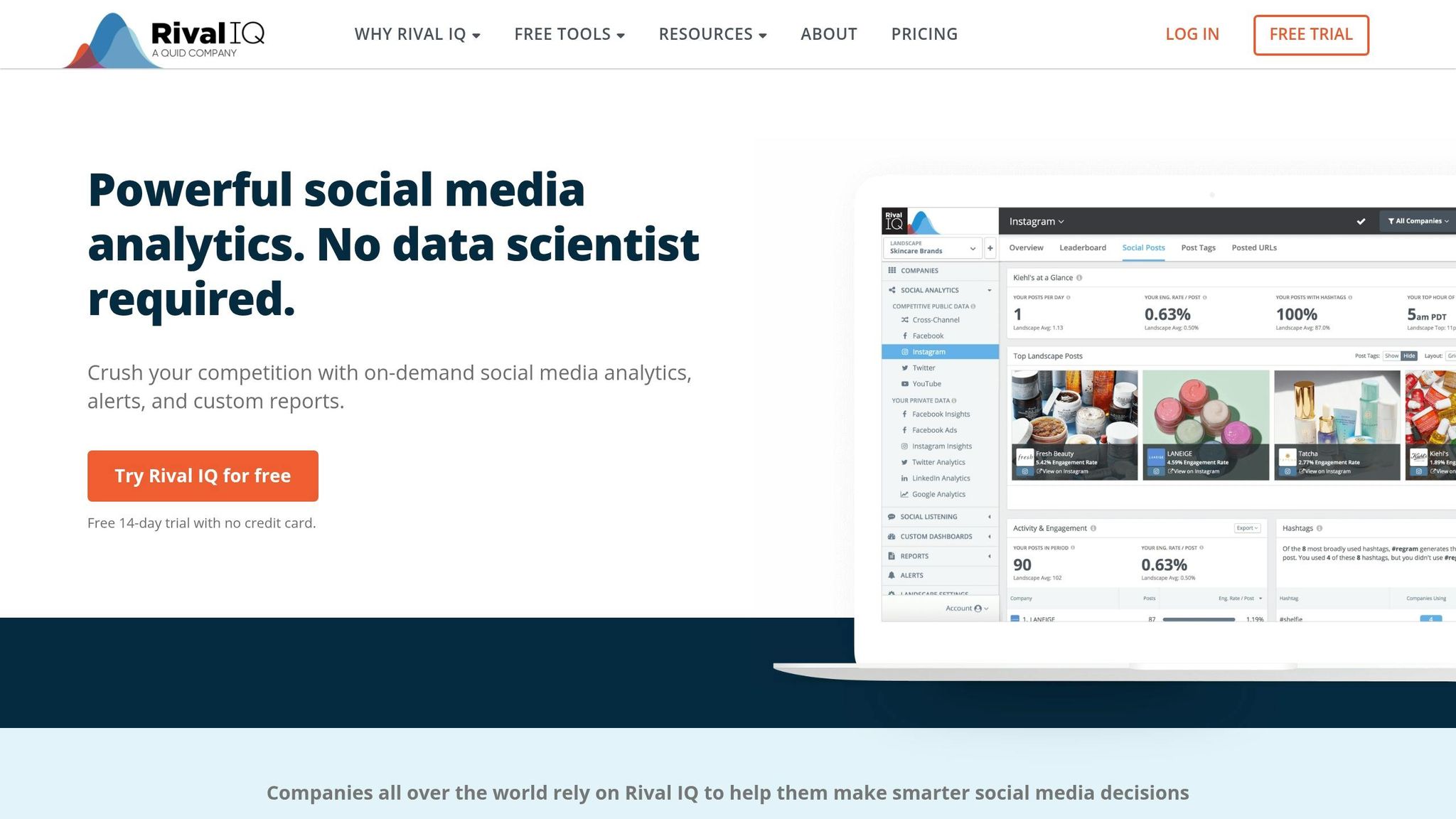
RivalIQ is a go-to for marketing teams needing detailed competitive intelligence. It tracks when competitors boost their posts and offers cross-channel benchmarking to show how your engagement rates stack up against industry averages. For teams in crowded markets, this platform is a must.
Pros: Advanced competitor detection, cross-channel benchmarking, detailed engagement metrics
Cons: Higher starting price, less focus on internal reporting
Best for: Marketing teams keeping tabs on competitors in competitive industries
Cyfe
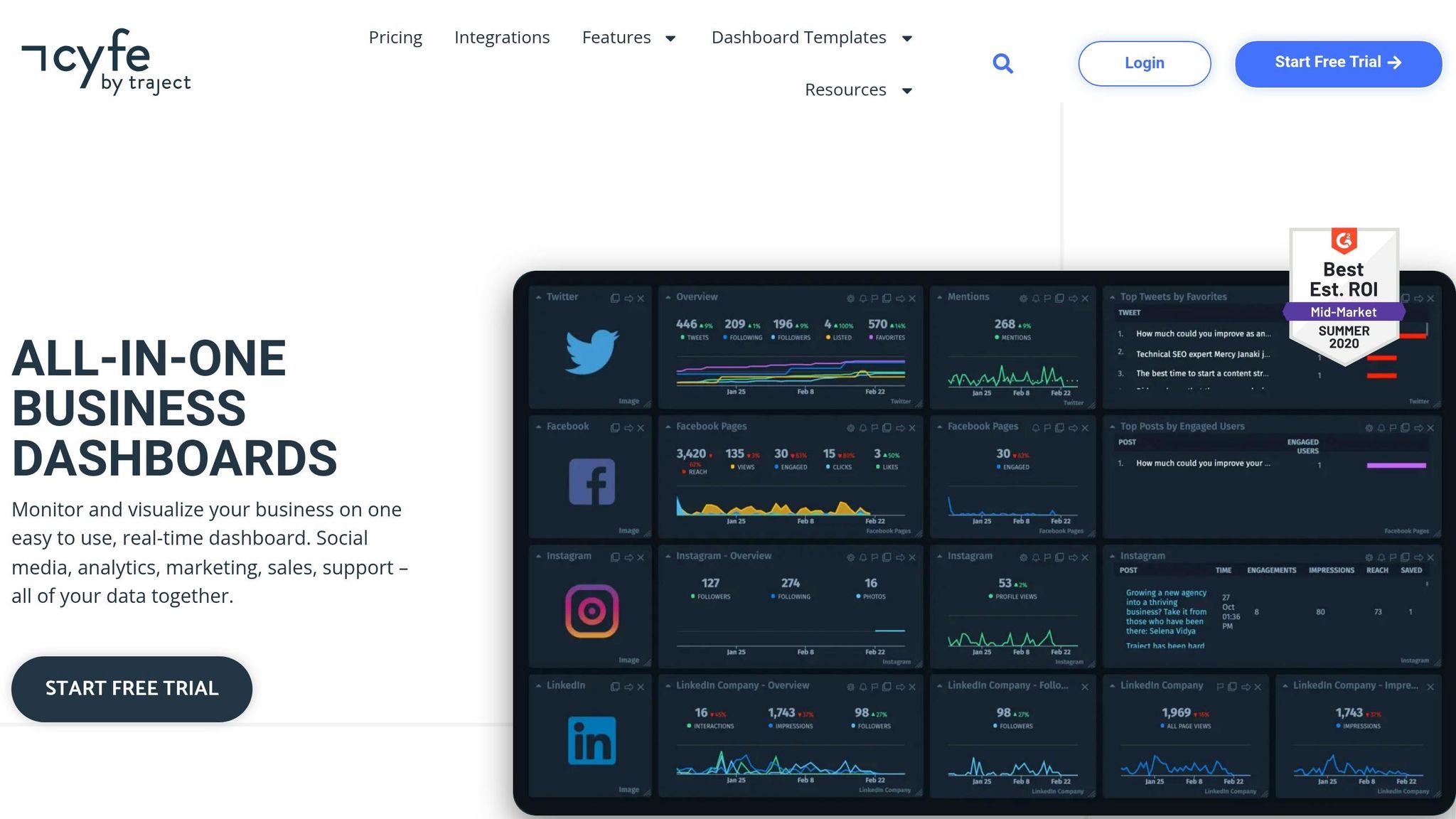
Cyfe excels at building customizable dashboards that pull together social data alongside insights from tools like Google Analytics, email marketing platforms, and CRM systems. This makes it ideal for teams that need to tie social metrics directly to business KPIs.
Pros: Highly customizable dashboards, integrations with non-social tools, visual widgets for presentations
Cons: Complex integrations need manual setup, less specialized for social features alone
Best for: Marketing managers presenting to execs and teams aligning social metrics with business goals
Keyhole
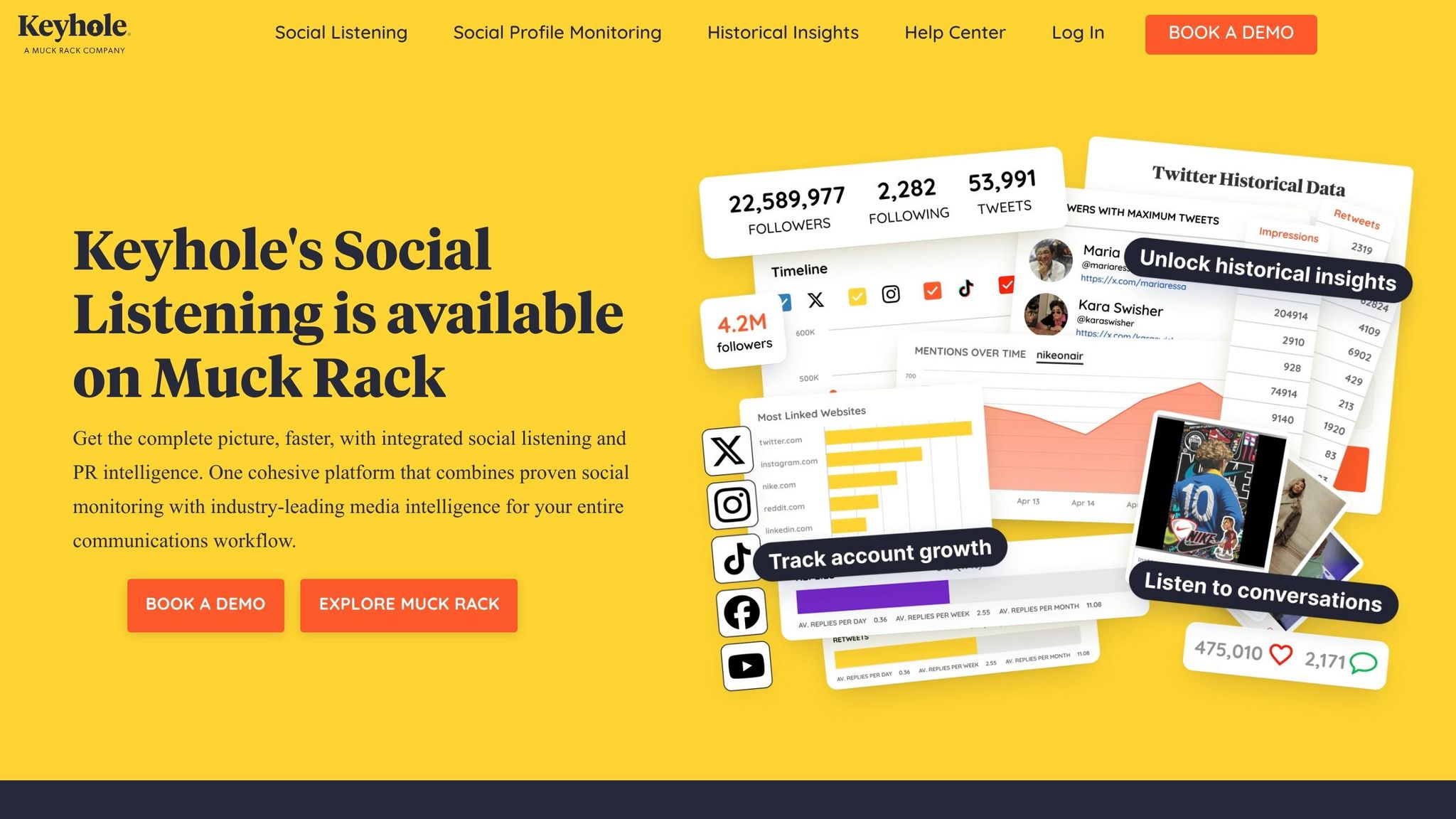
Keyhole is your go-to for hashtag tracking and influencer campaign analysis. Starting at $79/month, it provides real-time analytics on reach, impressions, and top contributors - perfect for events or product launches. Its targeted approach is a lifesaver for teams focused on campaigns.
Pros: Real-time hashtag data, influencer tracking, affordable entry plans
Cons: Limited for ongoing organic content analysis
Best for: Campaign-driven teams, brands running influencer partnerships, and event marketers
MagicBrief
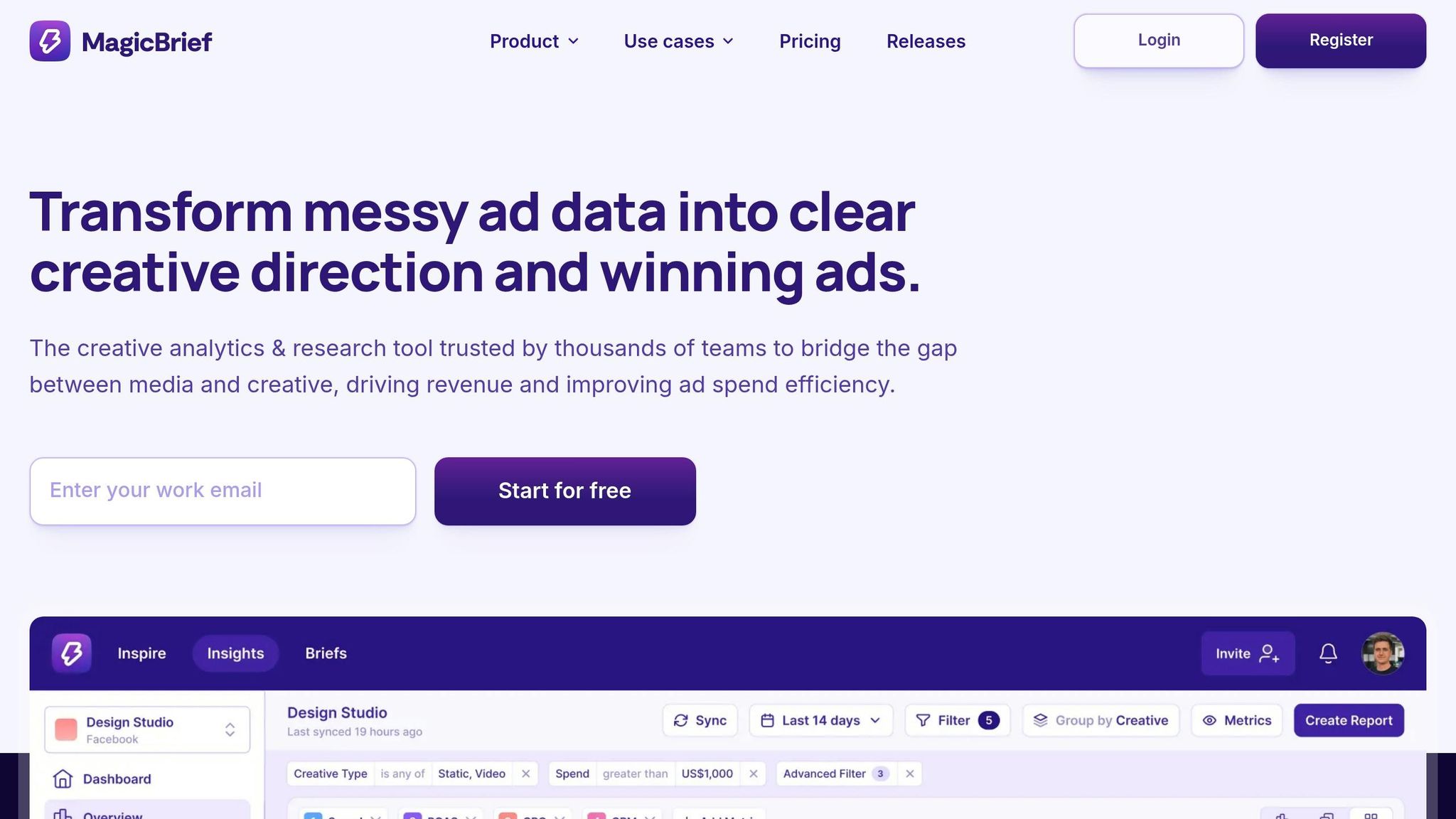
MagicBrief combines creative planning with performance tracking. It allows teams to organize ad creatives, storyboards, and campaign briefs while monitoring performance metrics, bridging the gap between creative work and measurable results.
Pros: Integrated creative tools, streamlined campaign planning, visual organization of assets
Cons: Limited organic analytics, newer platform with fewer third-party integrations
Best for: Creative teams managing paid campaigns and agencies juggling ad production with performance tracking
Comparison Table
| Platform | Supported Channels | Starting Price (USD) | Dashboard Customization | Reporting Features |
|---|---|---|---|---|
| Brandmentions | Facebook, Instagram, X, web | Custom pricing | Moderate | Real-time alerts, sentiment analysis |
| Social Status | Facebook, Instagram, X, TikTok, LinkedIn | Free plan available | High (four dashboards) | Organic, paid, competitor, influencer data |
| Social Insider | Facebook, Instagram, X, TikTok, YouTube | Custom pricing | High | AI-powered reports, content analysis |
| RivalIQ | Facebook, Instagram, X, LinkedIn, YouTube | $239/month | Moderate | Competitor benchmarking, boosted post alerts |
| Cyfe | All major networks + non-social | Custom pricing | Very high | Multi-source dashboards, business KPI links |
| Keyhole | Facebook, Instagram, X, TikTok | $79–$179/month | Moderate | Hashtag tracking, influencer analytics |
| MagicBrief | Facebook, Instagram, X, TikTok | Custom pricing | Moderate | Creative campaign tracking, ad performance |
How to Choose the Right Social Media Analytics Tool
Define Your Goals and Budget
Before diving into the endless options, nail down 3–5 key business metrics you want to track. Are you focused on follower growth? Conversion rates? Maybe you're after a bigger share of voice. Knowing what matters most helps you zero in on tools that align with your goals - and stops you from paying for extras you don’t need. If you’re a solo marketer, tools under $50/month might do the trick, but agencies often need more advanced features, which come at a higher price.
Here’s a tip: think ahead. Estimate how your needs might grow over the next year. Will you be adding more users, managing extra social profiles, or onboarding new clients? Pricing structures vary - some tools charge per user or profile, while others offer unlimited seats. That small difference can have a big impact on your budget.
"91% of marketers say social media marketing has increased their brand exposure, but only 41% can accurately measure ROI." – HubSpot
Finally, make sure the tool can integrate smoothly with your existing systems before committing.
Check Integration Capabilities
Your analytics tool should play nice with the platforms you already use. Whether it’s a CRM system, business intelligence tools like Looker Studio or Tableau, or Google Analytics, double-check compatibility. For instance, tools like Cyfe are great at blending social data with insights from email campaigns and CRM systems, making it easier to connect social media performance to your business goals.
Also, think about the platforms you’re active on today - and the ones you might explore tomorrow. If you’re considering emerging networks like Threads, Bluesky, or Twitch, make sure the tool supports them. Some platforms may let you post on multiple networks but only offer analytics for a few, so ensure you’ll get detailed metrics for all your key channels.
Once integrations are sorted, it’s time to evaluate reporting and customization options.
Review Reporting and Customization Features
Look for tools with drag-and-drop report builders - they’re a lifesaver when preparing client presentations or boardroom updates. Many platforms provide hundreds of pre-built KPIs and modules to track specific goals, like engagement or ROI, without manually crunching numbers. For agencies, white-labeling options are essential. Think custom logos, branded PDFs, and hosting reports on your domain - these features help maintain a polished, professional image for your clients.
Another must-have? Flexible export formats. Whether it’s PDF, CSV, or PPTX, make sure you can easily transfer your data if you ever switch tools. Strong reporting features not only save time but also help you stay sharp and focused on what really drives results.
| Business Type | Priority Features | Recommended Budget |
|---|---|---|
| Solo Marketer | Ease of use, basic scheduling, low cost | $0–$50/mo |
| Growing SMB | Team collaboration, ROI tracking, platform depth | $100–$300/mo |
| Digital Agency | White-labeling, multi-client portals, automation | $200–$500/mo |
| Enterprise | Governance, security, social listening and monitoring tools, global support | $1,000+/mo |
Conclusion
Picking the right all-in-one social media analytics tool isn’t just about crunching data - it’s about saving hours and showcasing the true impact of your efforts. Think about it: automated tracking can knock out tasks in 5 minutes that used to eat up 15 hours a week. That time saved? It’s like giving yourself a head start to tackle bigger, strategic goals.
Each platform we’ve explored has its own strengths. Brandmentions helps you spot shifts in brand sentiment before they snowball. Social Status dives deep into analytics and offers polished white-label reports. Social Insider is your go-to for competitive benchmarking and spotting content trends. RivalIQ delivers a full-spectrum competitive analysis, while Keyhole zeroes in on real-time hashtag and influencer tracking. And let’s not forget Cyfe and MagicBrief, each bringing their own standout features to the mix.
No matter your choice, the right tool can transform how you measure success and free you up to focus on what really matters.