In 2026, influencer marketing is all about proving ROI and tracking real engagement. With the industry projected to hit $31.2 billion by 2027, brands are moving away from vanity metrics like follower counts and focusing on tools that deliver measurable outcomes. The challenge? Up to 60% of budgets can be wasted on fake audiences without proper analytics. AI-powered tools are solving this by automating fraud detection, multi-touch attribution, and sentiment analysis - saving time and improving campaign accuracy.
Here’s a quick overview of the top AI influencer analytics tools for 2026 and what they excel at:
- Brandwatch: Best for large enterprises needing advanced sentiment analysis and ROI tracking.
- Sprout Social: Ideal for mid-sized brands managing social media and influencer campaigns in one platform.
- HypeAuditor: Focuses on audience authenticity and fraud detection with high accuracy.
- Brand24: Great for real-time monitoring and sentiment tracking during time-sensitive campaigns.
- Upfluence: Tailored for e-commerce brands seeking precise sales attribution and integration with platforms like Shopify.
Key Metrics to Track in 2026:
- True Engagement (filters out fake interactions)
- Earned Media Value (EMV)
- Sentiment Analysis (positive vs. negative feedback)
- Cost-Per-Engaged-Audience (CPEA)
- Multi-Touch Attribution (tracks the full customer journey)
- Audience Quality Score (AQS) (often measured via influencer profile insights)
When choosing a tool, align it with your goals - whether that’s sales attribution, audience quality, or audience insights. A careful selection process can save time, reduce wasted spend, and maximize ROI.
This AI Finds the BEST Influencer for Your Brand! | Best Influencer Marketing Tool 2025
Top 5 AI Influencer Analytics Tools for 2026
Choosing the right tool can mean the difference between a 6× ROI and a wasted budget. Whether you're managing global campaigns or looking for sales-attributable data as an online retailer, these platforms tackle key influencer marketing challenges. Here's how the top five tools stack up in 2026.
Brandwatch: Best for Enterprise-Level ROI Tracking
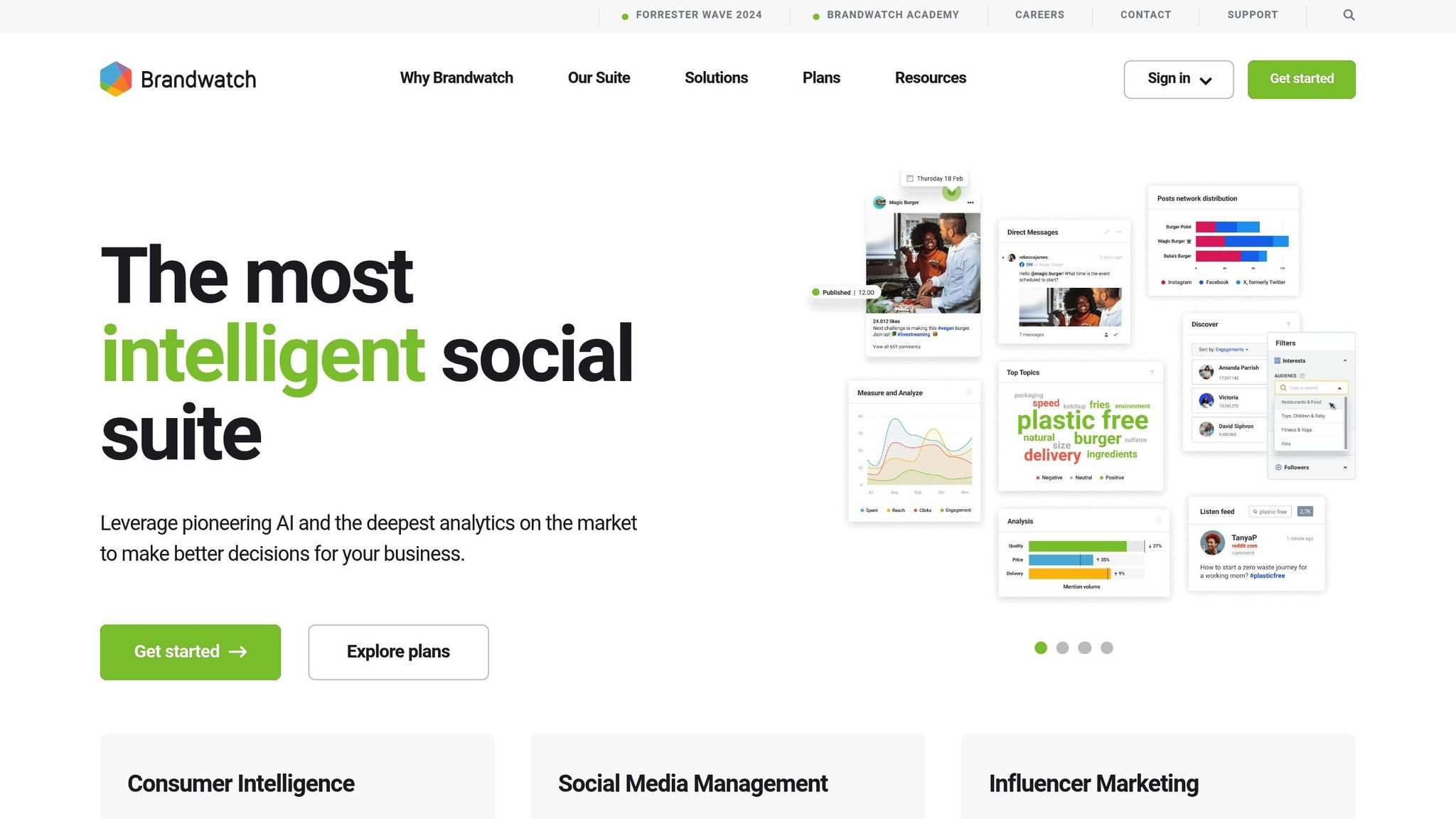
Brandwatch caters to brands with multi-million-dollar influencer budgets. Using AI, it analyzes conversations from 30 million creators to assess audience sentiment and interests before you sign a contract. Instead of guessing whether an influencer’s audience is engaged, Brandwatch’s sentiment engine digs into comments, shares, and replies to uncover what truly resonates.
Key Features:
- Conversation Analysis: Tracks brand mentions across 100 million+ websites to measure organic reach.
- Competitor Benchmarking: Offers real-time insights into your influencer share-of-voice compared to competitors.
- Cross-Platform Monitoring: Consolidates data from Instagram, TikTok, YouTube, and Twitter into one dashboard.
- Historical Data: Provides up to 2.5 years of performance history to identify seasonal trends.
Pricing: Starting at $478/month, with enterprise-level suites available via custom quotes.
| Pros | Cons |
|---|---|
| Advanced sentiment analysis to flag brand safety issues early | Can be challenging for first-time users |
| Centralizes multi-channel data effectively | High costs may deter smaller businesses |
Best For: Large enterprises managing 50+ influencer partnerships, requiring detailed sentiment and ROI insights for strategic decisions.
Next, let’s look at Sprout Social, which simplifies influencer workflows.
Sprout Social: Best for Unified Social and Influencer Workflows
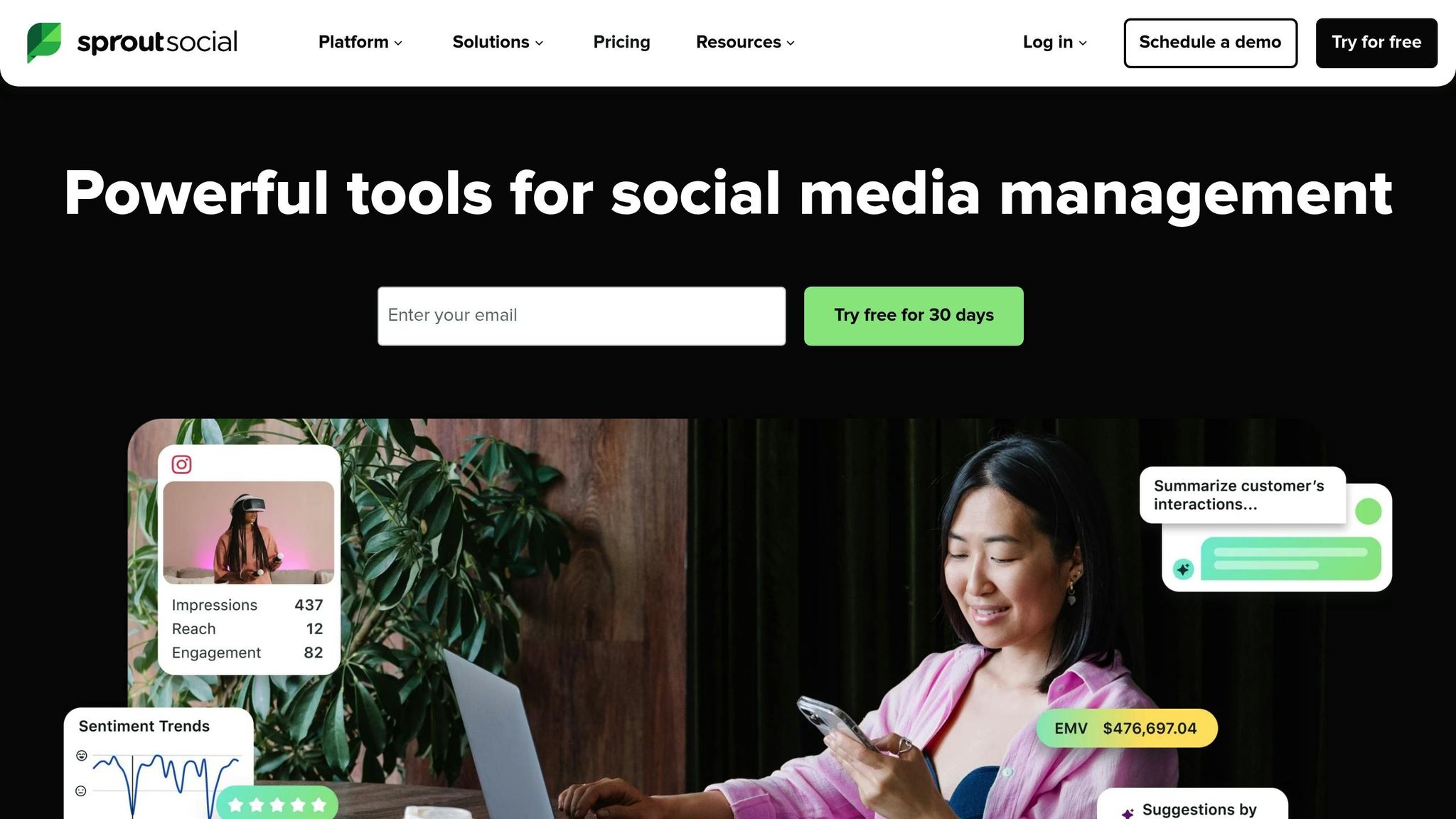
Sprout Social combines publishing, listening, and creator management in one platform. Its AI-powered "Brand Fit Score" evaluates creators against your brand values, while "Brand Safety Reports" highlight potentially risky content. For example, Care to Beauty replaced manual spreadsheets with Sprout Social, cutting vetting time by 75% and achieving a 10× boost in influencer-driven sales.
Key Features:
- Unified Dashboard: Streamlines influencer outreach, content approvals, and social publishing while consolidating data from Instagram, TikTok, LinkedIn, and Facebook.
- Trackable Links: Generates unique URLs for each creator to monitor traffic and conversions.
Pricing: Starts at $199/month (billed annually), with additional influencer features available in higher tiers or as add-ons.
| Pros | Cons |
|---|---|
| All-in-one platform reduces the need for multiple tools | Influencer features may cost extra on lower-tier plans |
| AI-powered vetting saves time | Less specialized in detecting influencer fraud |
| Excellent customer support with high user ratings | Requires annual billing for lower pricing |
Best For: Mid-sized brands and agencies looking to manage social media and influencer campaigns under a single platform.
Now, let’s explore HypeAuditor, which focuses on audience authenticity.
HypeAuditor: Best for Audience Authenticity and Fraud Detection
HypeAuditor addresses ROI and fraud detection challenges with its Audience Quality Score (AQS), which identifies 95.5% of known fraudulent activities by analyzing follower growth patterns, engagement timing, and comment authenticity. Major brands like LVMH, Unilever, and L'Oréal trust its 35+ metrics for rigorous creator screening.
Key Features:
- Fraud Detection: Flags suspicious follower spikes, bot accounts, and engagement pods.
- Audience Demographics: Delivers verified insights into follower locations, age groups, and interests.
Pricing: Custom pricing based on selected modules, with base packages starting around $399/month.
| Pros | Cons |
|---|---|
| Industry-leading fraud detection accuracy | More focused on discovery than full campaign management |
| Trusted by major global brands | Custom pricing requires consultation |
| Detailed audience insights improve targeting | Limited e-commerce integrations compared to other platforms |
Best For: Agencies and brands aiming to avoid fake followers and ensure authentic engagement before allocating budgets.
For campaigns requiring immediate responses, Brand24 is the go-to tool.
Brand24: Best for Real-Time Influencer Monitoring and Sentiment
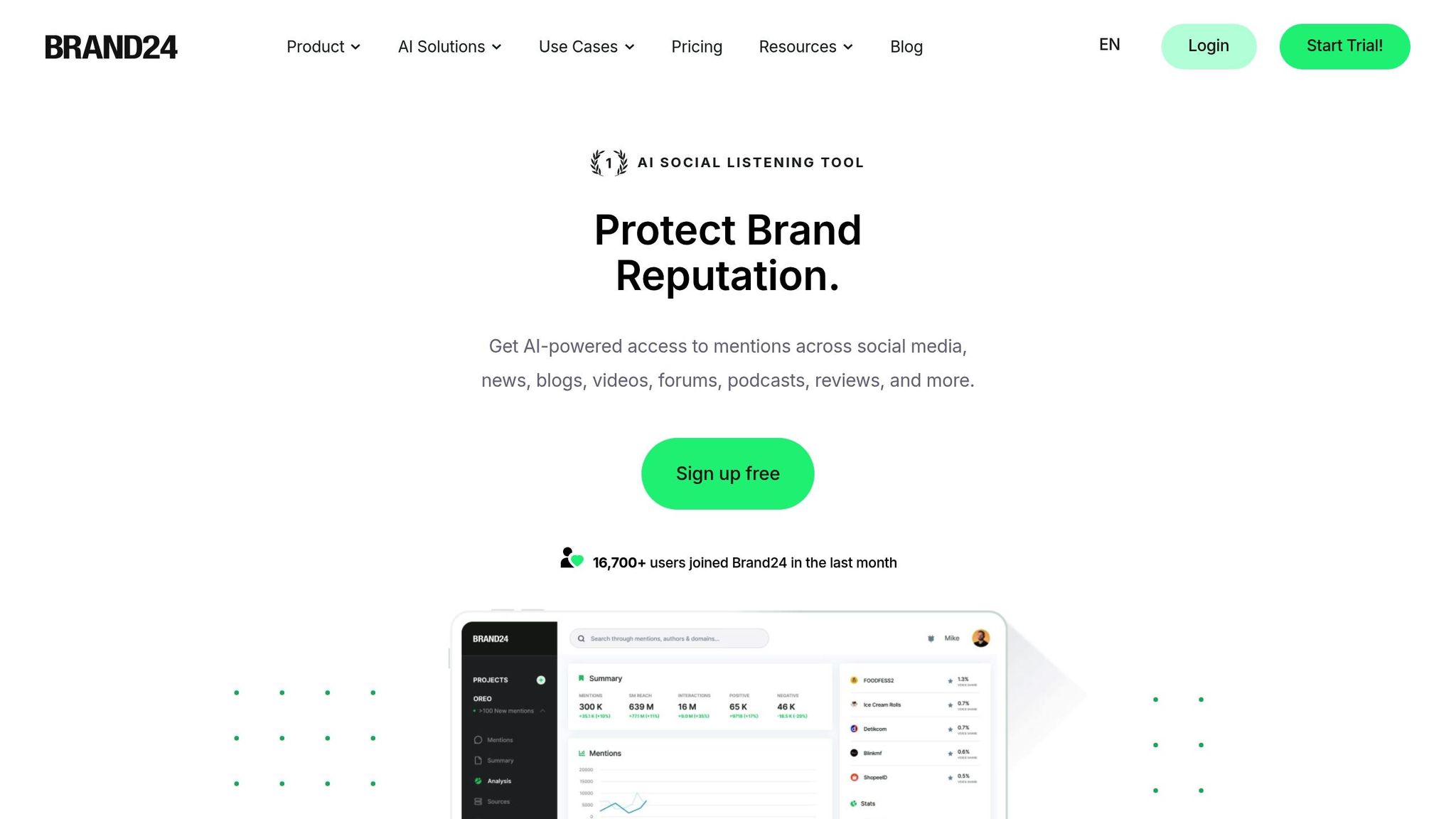
Brand24 specializes in real-time conversation tracking. It scans news sites, blogs, forums, and social platforms to monitor brand mentions and sentiment shifts. If an influencer’s post triggers negative feedback, you’ll be alerted instantly - allowing for quick crisis management.
Key Features:
- Live Alerts: Sends notifications when mentions spike or sentiment turns negative.
- Sentiment Analysis: Categorizes comments as positive, neutral, or negative.
- Trend Tracking: Identifies emerging topics and hashtags early.
- Multi-Language Support: Monitors conversations in various languages.
Pricing: Plans start at approximately $99/month, depending on mention volume.
| Pros | Cons |
|---|---|
| Real-time alerts for proactive management | Less effective for pre-campaign influencer vetting |
| Affordable for small and mid-sized teams | Limited sales attribution capabilities |
| Easy-to-read sentiment dashboards | Fewer e-commerce integrations |
Best For: Brands managing time-sensitive campaigns, such as product launches, where immediate reaction to influencer activity is crucial.
Finally, Upfluence is tailored for e-commerce brands.
Upfluence: Best for E-Commerce Integration and Attribution
Upfluence is ideal for online retailers focused on tracking influencer-driven sales. It integrates seamlessly with platforms like Shopify, WooCommerce, and Amazon to measure Earned Media Value (EMV), coupon codes, and affiliate link performance in real time. For instance, MercerLabs used Upfluence to onboard 200 creators and generate bulk affiliate codes, achieving a 6× ROI by focusing on top performers.
Key Features:
- E-Commerce Sync: Links sales data to influencer efforts for accurate ROI tracking.
- Bulk Code Generation: Creates unique promo codes for numerous creators.
Pricing: Starts at $478/month, with a 12-month contract required.
| Pros | Cons |
|---|---|
| Direct sales attribution simplifies ROI measurement | Requires an annual commitment |
| Focuses on revenue-driven outcomes | Steeper learning curve for beginners |
| Optimizes budget allocation through clear data | Custom pricing can increase costs for larger campaigns |
Best For: E-commerce brands and direct-to-consumer businesses that prioritize revenue metrics over vanity statistics, providing clear answers to "How many sales did this influencer generate?"
Head-to-Head Comparison Table
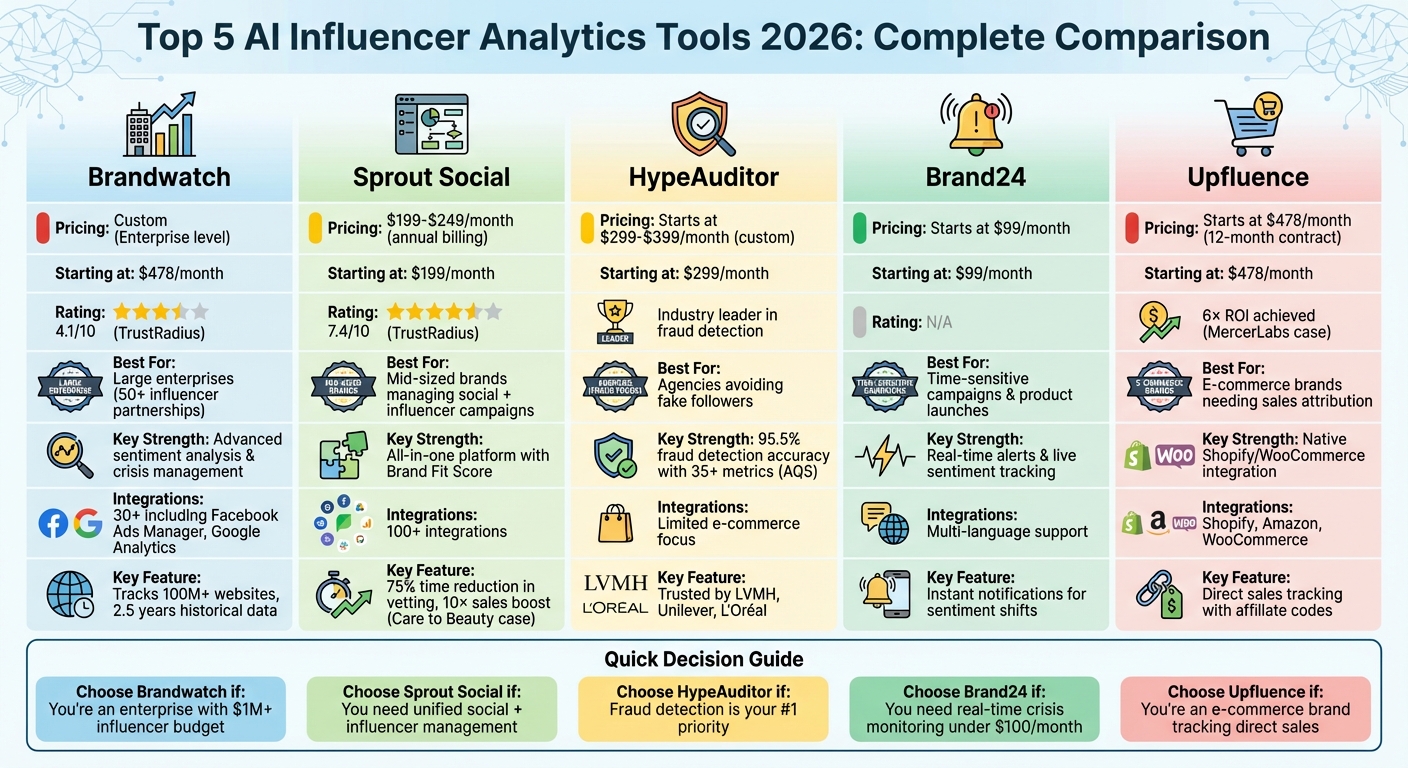
AI Influencer Analytics Tools Comparison 2026: Features, Pricing & Best Use Cases
When managing multiple influencer platforms, it’s crucial to evaluate key metrics side by side. Below is a breakdown of how various tools perform in areas like engagement analytics, sentiment analysis, ROI tracking, and more. This table is designed to help you quickly identify which platform aligns with your budget and campaign needs.
| Tool | Engagement Analytics | Sentiment Analysis | ROI Features | Pricing | Key Integrations | Best For | Rating |
|---|---|---|---|---|---|---|---|
| Brandwatch | High-level reach & share-of-voice tracking | Advanced crisis management & real-time monitoring | Consumer intelligence integration with Google Analytics | Custom (Enterprise) | 30+ integrations including Facebook Ads Manager | Large enterprises | 4.1/10 (TrustRadius) |
| Sprout Social | Brand Fit Score for alignment | Brand mention sentiment & safety reports | Trackable links + Google Analytics & Facebook Ads sync | $199–$249/mo | 100+ integrations | Mid-sized brands | 7.4/10 (TrustRadius) |
| HypeAuditor | 35+ metrics (AQS) for fraud detection | Basic audience quality focus | Audience Quality Score to prevent wasted spend | Starts $299/mo | Limited e-commerce focus | Agencies avoiding fake followers | Industry leader in fraud detection |
| Brand24 | Real-time mention tracking | Live sentiment categorization (positive/neutral/negative) | Basic mention-based ROI | N/A | Multi-language support | Time-sensitive campaigns & launches | N/A |
| Upfluence | Follower authenticity checks | Brand affinity analysis | Native Shopify/WooCommerce + affiliate tracking | Starts $478/mo (12-month contract) | Shopify, Amazon, WooCommerce | E-commerce brands | 6× ROI for MercerLabs |
This table highlights each platform's strengths, making it easier to focus on ROI and actionable insights for influencer campaigns in 2026.
HypeAuditor stands out for its ability to detect fake engagement with over 35 metrics, a critical feature given the $1.3 billion lost to fake followers annually. Brandwatch shines in sentiment analysis, offering advanced tools for crisis management and real-time monitoring of brand mentions. For e-commerce brands, Upfluence’s Shopify integration delivers clear sales attribution, as shown by MercerLabs achieving a 6× ROI by tracking affiliate codes for 200 creators.
"I've bounced between Modash and HypeAuditor for months... If you want deeper analytics, HypeAuditor is the pick." – Stevia Putri, Marketing Generalist, eesel AI
Sprout Social offers a well-rounded solution with extensive integrations and a unified dashboard, making it a great choice for teams managing both organic social and influencer campaigns. For smaller teams needing real-time crisis alerts, Brand24 provides practical tools with live notifications. When it comes to enterprise support, Sprout Social scores higher on TrustRadius (7.4/10) compared to Brandwatch (4.1/10), which could be a deciding factor for those seeking hands-on onboarding assistance.
sbb-itb-b3cfc51
How to Choose the Right Tool for Your Needs
Selecting an AI influencer analytics tool isn't about picking the one with the most bells and whistles - it’s about finding the one that aligns with your specific business goals. With 68% of brands struggling to prove the ROI of influencer marketing, the wrong tool can become nothing more than an expensive, underused database. By following a clear process, you can select a platform that delivers measurable results.
7-Step Process for Tool Selection
1. Define your campaign objectives.
Your choice of tool should depend on what you're trying to achieve. For example, if your goal is brand awareness, look for tools that specialize in tracking reach and share-of-voice. On the other hand, conversion-driven campaigns need platforms with strong click-through and sales attribution capabilities. If you’re unclear on whether you’re optimizing for impressions or revenue, even the most advanced dashboard won’t help.
2. Review your current tech stack.
Ensure the tool integrates seamlessly with platforms like Shopify or Salesforce. Without integration, you risk wasting time on manual data exports - defeating the purpose of automation.
3. Prioritize fraud detection features.
With fake followers and bot engagement being common risks, tools with features like "Audience Quality Scores" or AI-driven authenticity checks are essential. Many platforms, like HypeAuditor, offer free audits or trials to test their databases before committing.
4. Consider all costs, not just the subscription fee.
Look beyond the monthly price tag. Factor in expenses such as per-user licensing, premium add-ons like API access, training, and integration fees. A tool that costs $299/month but has $5,000 in setup fees might end up being pricier than a $500/month platform with full onboarding included.
5. Verify data reliability.
During a trial period, compare the tool’s data with Google Analytics and your CRM to ensure it aligns with actual sales and conversions. Use tools like UTM parameters, discount codes, and post-purchase surveys to capture additional demand that may not be visible in standard analytics.
6. Check for scalability.
Think about your growth plans. If you’re managing 50 influencers now but expect to scale to 500, switching tools later can lead to data migration headaches and reporting gaps. Choose a platform that grows with you.
7. Request SOC 2 documentation.
If you handle sensitive customer data, especially in industries like healthcare or finance, SOC 2 Type II certification is critical for ensuring data security. This is non-negotiable for enterprise-level operations.
Use-Case Matrix for Small vs. Enterprise Businesses
Different businesses have different needs when it comes to analytics tools. Small businesses, for instance, often prioritize affordability and ease of use, while enterprise organizations focus on governance and global reporting. Here’s a breakdown:
| Business Size | Primary Need | Recommended Tool Focus | Typical Budget |
|---|---|---|---|
| Small Business | Affordability & Ease of Use | Basic monitoring, content scheduling | $99–$299/month |
| Mid-Market | Growth & Discovery | Social listening, sentiment analysis, e-commerce integration | $500–$2,000/month |
| Enterprise | Governance & Attribution | Multi-market reporting, BI/CRM integration, global payments | $5,000–$50,000+/month |
Small businesses often rely on tools like MightyScout or Favikon, starting at $99/month, for basic discovery and tracking. Mid-market teams benefit from platforms like Brandwatch or Upfluence, which offer social listening and automation features that can save up to 120 hours per campaign. Enterprise-level tools, such as CreatorIQ or Traackr, provide advanced governance, fraud detection, and data-lake integrations to support global campaigns.
The key difference isn’t just the budget - it’s the complexity of workflows. Smaller teams need simple interfaces, while larger organizations require tools that support multi-team collaboration and integrate deeply with CRMs. For e-commerce brands, platforms with Shopify or Amazon integrations are ideal for tracking revenue, while awareness-focused brands might prefer Brandwatch for its social listening capabilities.
Addressing Common Concerns
One major concern is cost. Instead of focusing solely on the monthly fee, think about the bigger picture. For instance, a $500/month tool may seem expensive, but without proper fraud detection, you could waste 60% of your budget on influencers with fake engagement.
Data accuracy is another critical factor. Tools that rely on official social media APIs ensure fresher, more reliable data compared to those that scrape information. Look for features like "True Reach" metrics, which filter out bots and inactive users to estimate how many real people an influencer reaches. This is particularly important since up to 9.5% of Instagram accounts are fake.
Scalability can also be a concern, especially if you’ve had bad experiences with data migration. Before committing, ask vendors about their policies on exporting historical data and API access. Can you easily retrieve your campaign data if you switch platforms? Do they offer custom integrations to fit your workflows? Treat your analytics tool as a long-term investment, not just another subscription.
"An analytics tool without a strategy is just a dashboard of disconnected numbers." - Sprout Social
Ultimately, the right tool should simplify your work, not complicate it. If you find yourself spending more time managing the platform than analyzing results, it’s time to rethink your choice.
Real-World Case Studies
These examples show how AI tools have delivered measurable results for businesses.
Case Study 1: Brandwatch Delivers 4x ROI for Enterprise Campaigns
Enterprise campaigns often require tools that can measure both sentiment and sales outcomes effectively. One enterprise brand turned to Brandwatch's advanced sentiment analysis and real-time monitoring, which pulls data from over 100 million sources, to reshape their influencer strategy. By tracking consumer sentiment and monitoring brand perception shifts throughout their campaign, the team gained valuable insights. Brandwatch's AI-powered alerts flagged emerging trends and potential risks, enabling the marketing team to tweak their messaging mid-campaign. The results? A 4x return on investment, driven by the platform's ability to connect qualitative sentiment insights with concrete sales data. This case demonstrates the importance of monitoring sentiment alongside traditional performance metrics.
This success story shows that businesses of any size can achieve similar outcomes by focusing on sentiment data.
Case Study 2: Sprout Social Simplifies Multi-Channel Campaigns
Global beauty retailer Care to Beauty transformed its campaign processes with Sprout Social's centralized analytics platform (formerly Tagger). Before adopting the tool, the company manually vetted creators and tracked performance across multiple channels - a time-consuming process. Sprout Social's platform introduced trackable links and advanced data filtering, allowing the brand to unify its multi-channel data into actionable insights. The results were impressive: 10x influencer-attributed sales during a major promotion and a 75% reduction in time spent analyzing influencer profiles. By consolidating data in one place, the team demonstrated ROI to stakeholders, securing a larger marketing budget and improving campaign efficiency.
"The platform's analytics features allowed [Care to Beauty] to move beyond qualitative measures to a solid, data-backed approach." – Sprout Social Insights
This example highlights how centralized tools can streamline operations and boost campaign impact.
Case Study 3: Upfluence Powers E-Commerce Growth Through EMV Tracking
An e-commerce brand used Upfluence's integration with Shopify to identify and activate influential customers. Through the "Live Capture" feature, the brand pinpointed loyal micro-influencers and engaged them as ambassadors using promo codes and affiliate links. This setup allowed the team to track every sale, refund, and conversion back to individual influencers. By shifting their budget from macro-influencers to these authentic advocates, the brand achieved better cost-per-acquisition rates and increased overall profitability. The precise tracking capabilities of Upfluence proved that detailed attribution leads to smarter budgeting and stronger ROI.
These case studies underline how tailored AI tools can transform campaigns across industries.
Conclusion
For enterprise brands aiming to stay competitive and maintain long-term brand health, Traackr stands out with its Brand Vitality Score (VIT) for tracking ROI comprehensively. E-commerce brands, on the other hand, can leverage Upfluence for its seamless Shopify and WooCommerce integration, ensuring precise sales attribution. If fraud detection is a priority, HypeAuditor excels in identifying fake followers and bot networks with an impressive 95.5% accuracy.
Small businesses and startups operating with limited budgets might find Shortimize appealing at $99/month, offering tools to track short-form video performance across TikTok, Reels, and Shorts - no creator permissions required. Meanwhile, Sprout Social integrates influencer discovery with social media management, using AI-powered Brand Fit Scores to streamline workflows.
These tools play a critical role in delivering strong ROI for influencer campaigns. Research shows that businesses typically see an average return of $6.50 for every dollar spent on such campaigns. However, this level of success hinges on using tools that ensure authentic engagement. Without proper AI vetting, up to 60% of your budget could be wasted on low-quality audiences. To safeguard your investment, always verify a creator's authenticity before committing to any contracts.
Consider requesting demos from two or three platforms that align with your goals - whether it’s sentiment analysis, sales attribution, or audience authenticity. Keep in mind that most enterprise tools require 2–8 weeks for full implementation. Choosing the right platform can save you an average of 120 hours per campaign in manual management and increase your Earned Media Value by as much as 30%. These advantages ensure that every campaign is backed by authentic engagement metrics and measurable ROI outcomes.
FAQs
How can AI influencer analytics tools help boost ROI and engagement?
AI-driven influencer analytics tools are transforming how brands approach ROI and audience engagement. Instead of just focusing on surface-level metrics like follower counts or likes, these tools dig deeper, offering insights that genuinely matter. For instance, they can identify fake followers and detect fraudulent interactions, ensuring your marketing dollars are spent on influencers who deliver authentic results.
These platforms also bring advanced features like sentiment analysis, which helps you gauge how audiences really feel about your campaigns. This means brands can fine-tune their messaging to create stronger emotional connections. On top of that, multi-channel attribution links influencer activities directly to conversions, giving you a clearer picture of how your efforts translate into revenue.
By automating data collection and minimizing errors, AI tools simplify decision-making. They give brands the confidence to make smarter, data-backed choices, ultimately boosting both engagement and profits.
What features should you prioritize when choosing an AI influencer analytics tool?
When choosing an AI influencer analytics tool, it's essential to focus on features that ensure precise campaign tracking and boost your return on investment. Look for tools that offer detailed engagement metrics - these go beyond surface-level likes and shares to include audience interactions, sentiment analysis, and engagement quality. Such insights can help you distinguish authentic engagement from superficial activity, reducing the risk of falling victim to influencer fraud.
Key features to consider include fraud detection to identify fake followers, ROI tracking to directly connect influencer campaigns to sales or conversions, and multi-platform analysis to evaluate performance across platforms like Instagram, TikTok, and YouTube. Tools equipped with customizable dashboards and real-time reporting allow you to monitor and tweak campaign strategies as needed.
Lastly, prioritize tools that are user-friendly and integrate smoothly with your existing marketing stack. This ensures a hassle-free setup and efficient workflows, making it easier to fine-tune campaigns and achieve tangible results.
How can I verify if an influencer’s audience is authentic?
To ensure an influencer’s audience is genuine, consider using AI-powered tools that specialize in spotting fake followers, bot activity, and fraudulent engagement. These tools dive into audience demographics, engagement trends, and sentiment to give you a clearer understanding of their authenticity.
Key features to look out for include fake follower detection, analysis of engagement quality, and tracking audience sentiment. Some platforms even flag sudden, unusual spikes in follower growth - often a red flag for inauthentic practices. Using these insights can help you build partnerships based on real, meaningful connections.