If your team finds brand issues late, social listening is the fix. For me, after testing the best tools for social media listening at TopSocialTools.com, the tools worth your time do five things well: track mentions across more than one platform, flag negative sentiment early, show trend shifts, watch competitors, and route alerts to the right person before viral chaos gets worse.
Here’s the short version:
- I treat social listening and social monitoring as different jobs
- I look for tools that track sentiment, trends, alerts, and competitor chatter
- I keep coming back to Brandwatch, Sprout Social, Mention, and Talkwalker
- I compare tools by team size, workflow, coverage, alert speed, and price
- I only trust setups with clear keywords, alert thresholds, and named owners
Ever wonder why some brands look calm, then suddenly spend 48 hours putting out fires? For me, it usually comes down to one thing: they saw mentions, but they missed the pattern. I’ve seen tools catch forum complaints before they hit bigger media, and I’ve seen flashy dashboards miss the posts that shaped the whole story.
Best Social Listening Tools 2026 || Sprout Social vs Hootsuite vs Brandwatch vs Meltwater
sbb-itb-b3cfc51
Quick Comparison
| Tool | Best fit | What it does well | Watch-out |
|---|---|---|---|
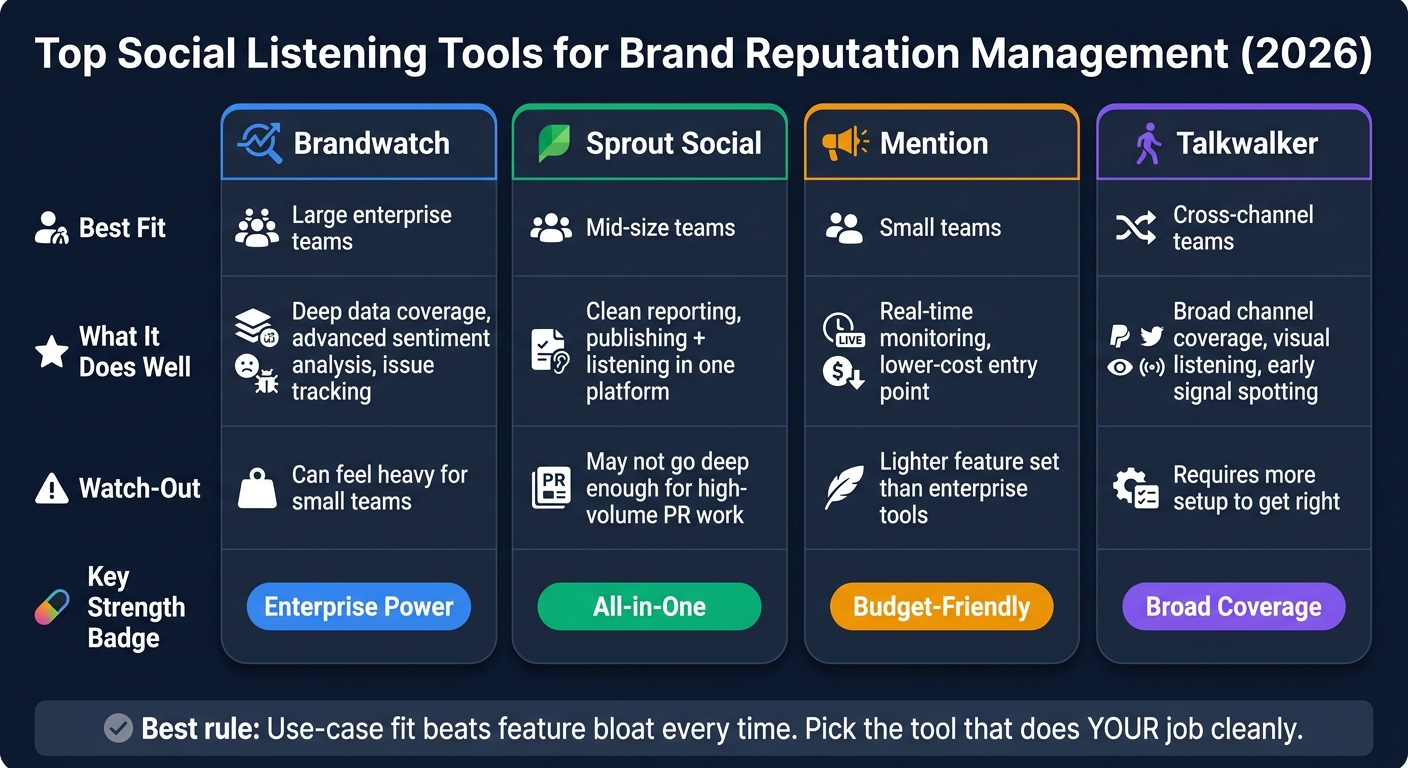
| Brandwatch | Large teams | Deep data coverage, sentiment analysis, issue tracking | Can feel heavy for small teams |
| Sprout Social | Mid-size teams | Clean reporting, publishing + listening in one place | May not go deep enough for high-volume PR work |
| Mention | Small teams | Real-time monitoring, lower-cost entry point | Lighter feature set than enterprise tools |
| Talkwalker | Cross-channel teams | Broad coverage, visual listening, early signal spotting | Can take more setup to get right |
What actually moved the needle for me? Use-case fit beats feature bloat every time. If your main job is crisis response, competitor tracking, or leadership reporting, pick the tool that does that one job cleanly. Bottom line: the best listening tool isn’t the prettiest one - it’s the one your team can trust at 9:12 a.m. when the mentions start piling up.
What Is Social Listening and Why Does Brand Reputation Depend on It?
For me, social listening is how you stop guessing what people think about your brand and start seeing the story form in real time. It tracks online conversations about your brand, industry, and competitors, then reads the sentiment and themes behind them. That matters because reputation doesn’t come from what a brand says about itself. It comes from what people believe, repeat, and build on.
I’ve seen this a lot while testing social tools every week at TopSocialTools.com. A brand can look calm on the surface, but once you dig into comments, forum threads, creator posts, and niche communities, you spot the early cracks. That’s the part many teams miss. If you miss the signal, you usually miss the window to respond.
In 2026, online channels often surface reputation risks before any formal statement or press coverage lands. That’s why social listening tools matter so much for marketers, PR teams, and brand managers. They give teams the setup to catch those early signs and respond before a small issue turns into a bigger reputation problem. What actually moved the needle in my testing wasn’t just seeing mentions faster. It was seeing the pattern behind them.
Social Listening vs. Social Monitoring: What Is the Difference?
I’ve noticed these terms get mashed together all the time, but they’re not the same thing. Social monitoring tracks direct mentions and engagement across platforms. It answers a simple question: What are people saying about us right now? It’s reactive. You’re looking at what already happened.
Social listening goes further. It looks at broader narratives, sentiment, trends, and the context behind conversations as they shift over time. It answers the more useful question: What does this mean for our brand, and what should we do about it? For reputation work, that gap matters. Monitoring tells you the fire started. Listening shows you why it started, where it’s spreading, and who’s adding fuel.
I ran into this with one tool that was great at pulling Instagram mentions but weak on Reddit and news sentiment. On paper, it looked fine. In practice, it missed the places where brand stories were actually taking shape. That’s the real difference-maker.
| Social Monitoring | Social Listening | |
|---|---|---|
| Focus | Direct mentions and tags | Broader narratives and sentiment |
| Approach | Reactive | Proactive |
| Output | Engagement data | Reputation insights |
| Best for | Community management | Reputation strategy, crisis response |
The gap matters more now because brand perception doesn’t form in one neat lane anymore. It’s messy, fast, and spread across too many channels for surface-level tracking to do the job.
How Brand Perception Changes in 2026
Brand conversations now move across social media, forums, and news outlets at the same time, and that changes everything. One post can start the story, but the story rarely stays there. Other people jump in, add context, spin the tone, and suddenly the brand isn’t dealing with one comment anymore. It’s dealing with a narrative.
From what I’ve seen, manual tracking just can’t keep up with that kind of motion. Teams try to watch X, LinkedIn, TikTok, Reddit, maybe Discord, then a trade site or local news piece shifts the mood again. It’s viral chaos, and humans alone can’t track it cleanly. Modern social listening tools scan those channels all the time, helping teams watch narratives before they escalate. That speed is what makes these tools matter for crisis response, sentiment tracking, and competitor monitoring.
I tested one platform that flagged a spike in negative forum chatter hours before the issue showed up in bigger media coverage. That kind of early read is where social listening earns its keep. The tricky part isn’t finding chatter. It’s knowing which chatter is about to shape perception.
Key Benefits and Must-Have Features of Social Listening Tools
For me, the whole point of social listening comes down to speed and clarity. I’ve seen brands lose control of a situation not because they didn’t care, but because they saw the warning signs too late. In my testing across 50+ social tools at TopSocialTools.com, the best ones help teams spot risk early, read the mood fast, and act before viral chaos turns into a bigger mess.
That’s why these tools matter so much for brand reputation management in 2026. If a platform can’t help your team move when the pressure hits, it’s just noise with a dashboard.
Benefits for Crisis Management, Sentiment Tracking, and Competitor Monitoring
I’ve noticed that social platforms usually show the first signs of trouble before anywhere else. A spike in angry replies, a weird thread gaining traction, a creator calling out a brand, that stuff often shows up long before formal media coverage. That narrow response window is where social listening earns its keep. PR and marketing teams that catch it early have a far better shot at containing the issue while it’s still manageable.
Sentiment tracking matters for the same reason. Raw mention volume can fool you. A brand can get flooded with posts, but unless you know whether the tone is annoyed, supportive, sarcastic, or flat-out hostile, you’re still guessing. Good sentiment analysis shows direction, not just activity. I’ve seen this play out with tools like Brandwatch, where a volume spike looked scary at first, but sentiment data showed most people were joking rather than piling on. That changes your response fast. What actually moved the needle was focusing on emotional drift, not just post counts.
Competitor monitoring is the other piece a lot of teams sleep on. When you track your category, not just your own brand name, you start seeing themes build before they land on your doorstep. If a rival is getting heat over shipping delays, pricing, or a campaign misfire, that can hint at what your audience may care about next. I’ve seen teams use tools like Talkwalker to watch category chatter and adjust messaging before the same issue touched them. The bottom line is simple: the broad view gives you more time to think.
These upsides only pay off if the tool puts the signal in front of you fast, gets the read right, and gives your team something clear enough to act on. That’s the tricky part.
Feature Checklist for Evaluating Social Listening Tools in 2026
When I compare tools, I start with alerts. No way around it. Real-time alerts are a must if your team handles brand reputation. If a tool makes you dig through dashboards to find a problem, it’s already slowing you down. I always look for custom thresholds too, because without them, you get buried in junk and miss the stuff that matters.
Sentiment is another area where tools can look good in a demo and fall apart in live use. Accuracy changes a lot across platforms and languages, and sarcasm still trips up plenty of systems. I’ve tested tools that nailed clean LinkedIn posts but struggled badly with TikTok comments and X replies. Here’s what I noticed: if your brand deals with mixed audiences or global chatter, weak sentiment labeling creates more work instead of less.
| Feature | Why It Matters for Reputation Work |
|---|---|
| Real-time alerts | Catches issues before they escalate |
| Sentiment analysis | Shows emotional direction, not just volume |
| Topic and trend detection | Identifies emerging narratives early |
| Audience demographics and influencer identification | Surfaces who is shaping the conversation and who they reach |
| Reporting dashboards | Track volume, sentiment, and issue trends over time |
Reporting matters more than people think. For teams sharing updates with leadership, legal, support, or product, dashboards and exportable reports aren’t just nice to have. They’re how social data becomes useful across the company. I’ve seen Sprout Social do this well for mid-size teams that need clean reporting without a pile of manual work. Being able to compare time periods, track sentiment shifts, and show issue patterns over time saves a ton of back-and-forth.
For me, those are the features that split basic monitoring from tools built for reputation work. What I’ve learned is that the best platforms don’t just collect chatter, they help teams make sense of it while there’s still time to respond.
Top Social Listening Tools for Brand Reputation Management
Top Social Listening Tools Compared: Brandwatch vs Sprout Social vs Mention vs Talkwalker (2026)
Picking a social listening tool sounds simple until you’re the one who has to use it every day. In my testing at TopSocialTools.com, I’ve seen teams get stuck with flashy platforms that look great in demos but slow them down when a brand issue starts brewing. The tool that wins is usually the one that helps your team spot risk fast and do something about it. That’s the part that matters when your mentions start spiking and nobody has time for menu-hopping.
Brandwatch, Sprout Social, Mention, and Talkwalker: What Each Tool Does Well
When I compare tools like these, I try to hold them to the same standard first, then match that against how a team actually works. A lean startup team doesn’t need the same setup as a huge PR department handling nonstop brand chatter, and that difference shows up fast once you’re inside the dashboard.
- Brandwatch does best with deep data coverage and advanced sentiment analysis, so it fits enterprise teams dealing with complex, high-volume brand narratives.
- Sprout Social brings listening, publishing, and reporting into one platform, which works well for mid-size teams that want clean dashboards and better visibility across roles.
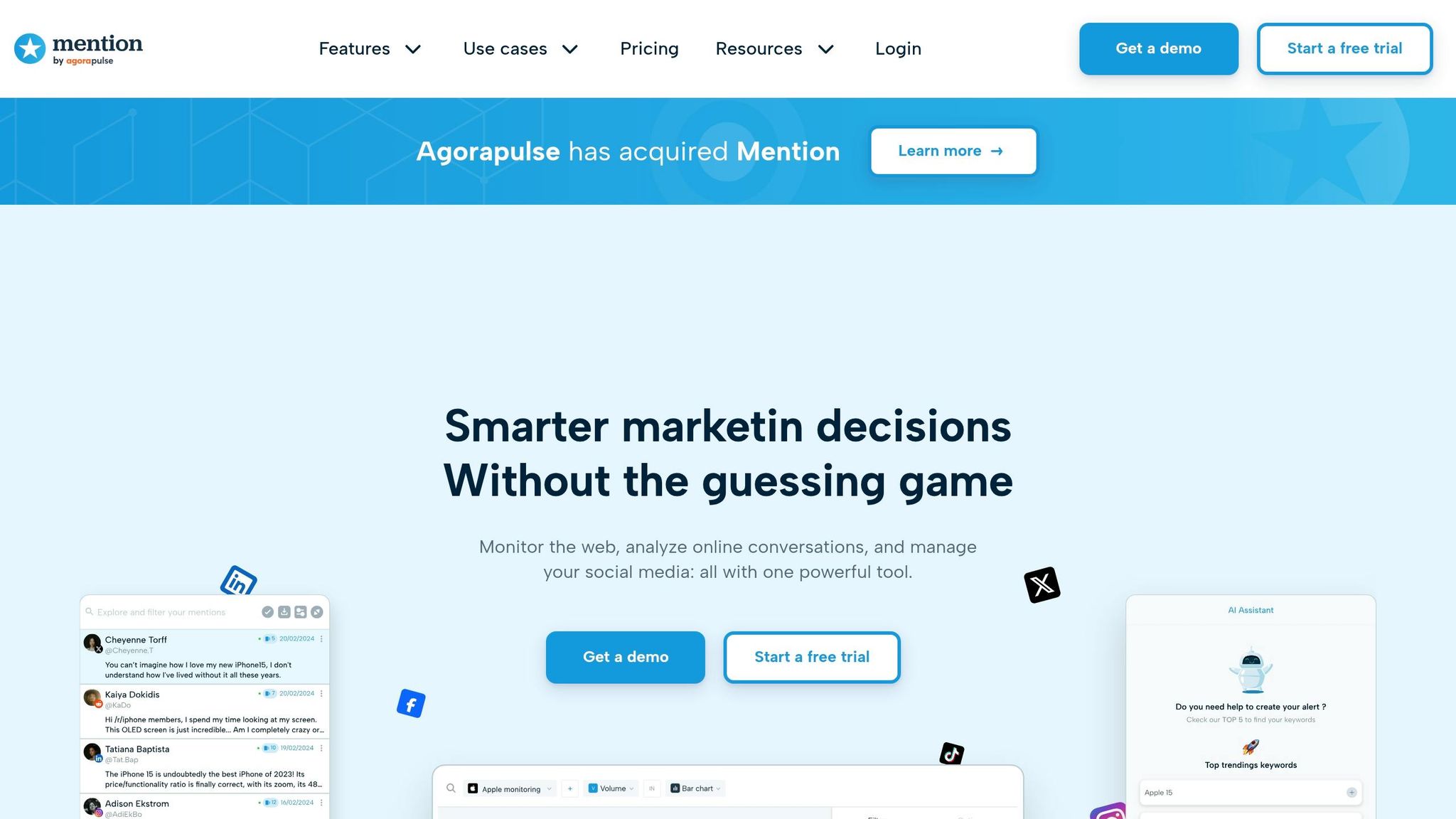
- Mention gives you accessible real-time monitoring at a lower price point, making it a solid pick for smaller teams tracking brand mentions across social and news sources.
- Talkwalker stands out with broad channel coverage and visual listening, helping teams catch early signals across social, forums, and media before issues snowball.
Here’s what I noticed: each tool has a clear lane. I’ve seen Brandwatch make more sense for teams swimming in data, while Mention felt easier for smaller crews that just needed to stay on top of the basics without blowing the budget. The real difference-maker is whether the tool fits your daily rhythm, not just its feature sheet.
How to Compare Social Listening Tools by Team Size, Workflow, and Budget
I wouldn’t compare these tools by features alone. For me, the better test is whether they fit your team size, workflow, and budget without adding friction. One of the most common mistakes I see is teams paying for deep listening power they never use, while missing simple stuff like alert speed or reporting handoff.
| What to compare | Why it matters |
|---|---|
| Search depth and data coverage | Determines which conversations your tool can actually find across platforms and sources |
| Alert speed | Enables faster escalation |
| Reporting and dashboards | Makes it easier to share findings with PR, marketing, and leadership |
| Workflow and collaboration | Helps insights move from monitoring to action |
| Pricing and plan structure | Keeps the tool aligned with budget and usage needs |
A good example? I’ve tested tools that had strong search coverage but weak alerts, and that tradeoff can hurt when timing matters more than data volume. If your PR lead, social manager, and leadership team can’t all move off the same signal, the platform starts feeling like extra work instead of support. What actually moved the needle was choosing something the team would use daily, not just admire in a sales call.
Once you choose a platform, the next step is defining keywords, alerts, and owners.
How to Build a Social Listening Strategy That Protects Brand Reputation
For me, picking the tool is the easy part. The part that actually saves a brand is building a workflow your team can repeat when things get messy.
I’ve seen this over and over while testing social tools at TopSocialTools.com: social listening only protects brand reputation when it leads to decisions, not just dashboards. You need a setup that helps your team spot trust breaks, complaint spikes, and bad info before they take over the conversation. That means defining the goal, building the right queries, and getting insights to PR and marketing fast. The bottom line: if nobody knows what to do with the alert, the tool won’t help you much.
Set Objectives, Keywords, and Alert Thresholds
Here’s what I noticed in my testing: teams get better results when they start with the outcome, not the keyword list. Decide what you need to learn first, then tie each goal to a reputation outcome like spotting risk, guiding a response, or shaping messaging.
Once that’s clear, build keyword groups around those goals. Include your brand name, key products, and competitor mentions so you can track how the conversation shifts over time. I’ve done this with tools like Brand24 and Mention, and the difference is obvious - you’ll miss the story if you only track your brand name and nothing around it.
Thresholds matter too, and this is where a lot of teams trip up. Don’t set alerts based only on volume. Set them by severity. Configure your tool to flag spikes in mention volume and high-risk negative language so you catch reputation risk early. What I’ve learned is simple: a small wave of angry posts can matter more than a big pile of neutral chatter.
Turn Listening Data Into Action Across Marketing and PR
Once alerts are live, collecting data is the easy part. Routing it to the right person? That’s where things usually break.
For me, the fix is clear ownership. Assign each alert type to one team so urgent reputation issues reach the right people fast. Send urgent issues to PR, recurring product feedback to marketing, and operational gaps to the customer team. I’ve seen brands lose hours just because five people saw the same alert and assumed someone else had it. That kind of delay adds fuel to viral chaos.
Don’t get stuck obsessing over single mentions either. Look for patterns. When the same issue pops up across channels, that’s your signal that messaging or response processes need work. At that point, don’t wait for the next report cycle. Escalate it.
A simple workflow usually covers the basics:
- Escalate urgent negative mentions when alert thresholds are exceeded.
- Review recurring feedback and share a listening summary when the same issue shows up across channels.
- Update messaging or campaigns when trend shifts are identified.
For me, the real difference-maker is using alerts for response, patterns for planning, and summaries for weekly decisions. The tricky part isn’t hearing the noise - it’s knowing who acts, and how fast.
What to Prioritize When Choosing Social Listening Tools in 2026
When a brand issue starts snowballing, nobody cares how pretty the dashboard looks. For me, the right social listening tool is the one your team can open, trust, and act on FAST when reputation is on the line.
After testing a pile of these platforms at TopSocialTools.com, I've seen the same mistake over and over: teams get distracted by feature bloat. Then a real issue hits, and half the room still isn't sure which workflow to use. That’s the part that actually matters. Once you’ve reviewed the feature set, cut your shortlist based on the job you need done most - crisis response, competitor tracking, or executive reporting.
For PR teams, sentiment accuracy sounds great on paper, but it only helps if the output is clear enough to defend in a tense meeting. I’ve seen tools spit out AI-labeled sentiment with zero explanation, which gets messy fast when leadership starts asking why a post was marked negative. Better AI models can improve sentiment accuracy without adding cost, but you still need to check whether the platform separates direct stated sentiment from AI inference. That distinction saves a lot of backpedaling later.
The real pressure test, though, is alerts. If the right person doesn’t get the alert in time, the rest of the tool barely matters. In my testing, tools that let you route alerts clearly, assign named owners, and escalate fast are the ones that hold up when things get chaotic. One example: I’ve seen teams using Brandwatch-style workflows stay calm during a spike simply because ownership was obvious from the start. No guessing, no Slack pileup, no “who’s on this?” nonsense.
Here’s what I look for first:
- Use-case fit for crisis response, competitor tracking, or executive reporting
- Sentiment output that’s clear enough to explain and defend
- A visible split between stated sentiment and AI inference
- Alert routing with named owners
- Fast escalation when risk starts climbing
If a tool can’t help your team make fast, defensible decisions, it’s not the right fit. That’s what I’ve learned after watching plenty of shiny platforms fall apart under real pressure.
Related Blog Posts
- The Topsocialtools Guide to Social Media Listening Tools in 2025
- Uncovering Hidden Insights with Next-Gen Social Media Monitoring Tools
- Ultimate Guide to Real-Time Social Media Analytics in 2026: Tools, Metrics, Strategies & Live Dashboards
- Social Listening, Decoded: The 2026 Buyer’s Guide to Brand Monitoring Platforms